Introduction to Chemistry & States of Matter
From the chemistry curriculum
Introduction to Chemistry & States of Matter
TL;DR
Chemistry is the study of matter and its changes, focusing on what things are made of and how they behave. Matter exists in different states—solids, liquids, and gases—each with unique properties based on how their particles are arranged and move. Understanding these states helps us predict how substances will act under various conditions.
1. The Mental Model
Think of chemistry as trying to understand the "stuff" around you. It's like taking apart LEGOs to see the individual pieces and then putting them back together in new ways to build something different.
2. The Core Material
Chemistry is all about matter—anything that has mass and takes up space. It explores what matter is made of (its composition) and how it behaves and changes (its properties and reactions).
What is Matter?

Photo by Ann H on Pexels
Matter is fundamentally made of tiny particles called atoms. These atoms can combine to form molecules. The way these atoms and molecules interact and are arranged determines the type of matter and its properties.
States of Matter
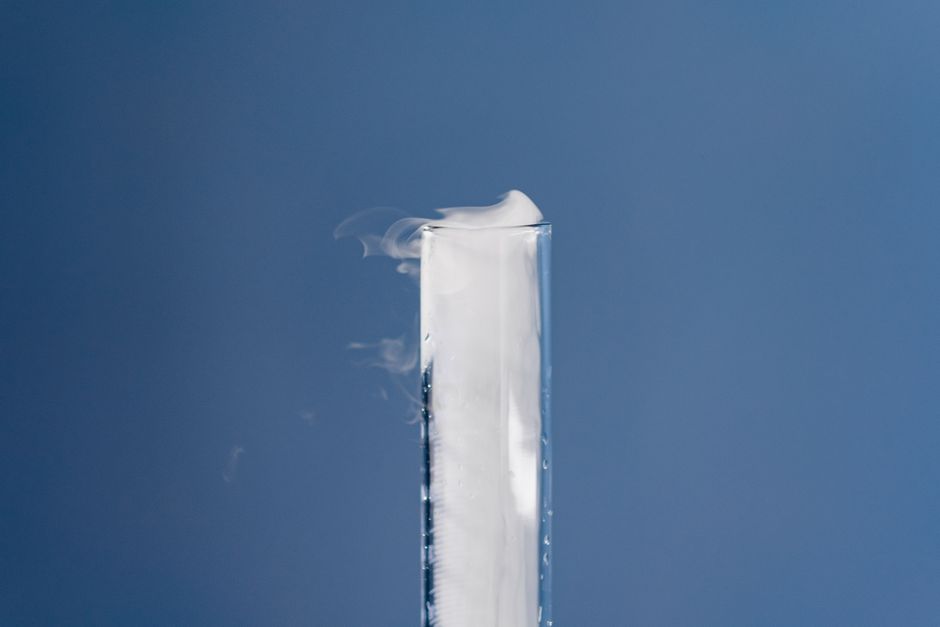
Photo by Ron Lach on Pexels
Matter primarily exists in three common states: solid, liquid, and gas. The key differences between these states come down to how closely packed the particles are and how much they can move.
- Solids: Particles are tightly packed in a fixed, orderly arrangement. They vibrate in place but don't move past each other. This gives solids a definite shape and a definite volume. Think of an ice cube.
- Liquids: Particles are close together but can move past one another. They're not in a fixed arrangement. This means liquids have a definite volume but take the shape of their container. Think of water in a glass.
- Gases: Particles are far apart and move randomly and rapidly. They have no fixed arrangement and no strong attractions between them. Gases have neither a definite shape nor a definite volume; they expand to fill their container. Think of steam.
Changes of State
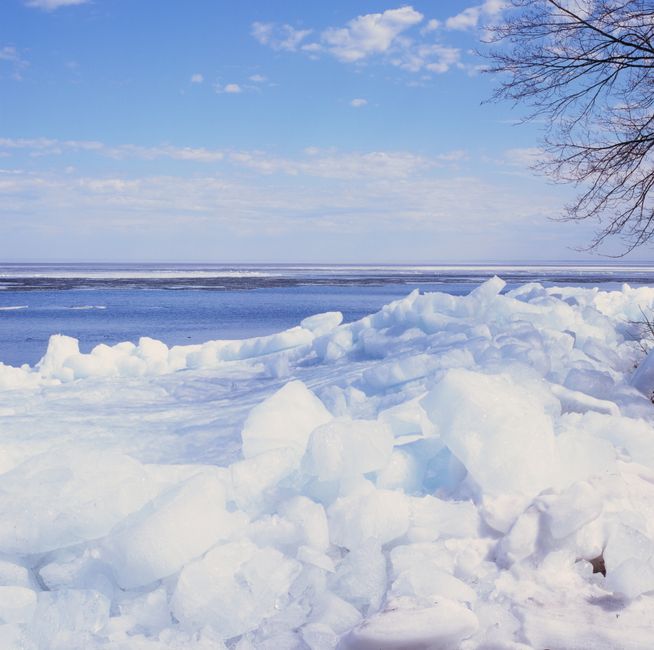
Photo by Jeff Wiles on Pexels
Matter can change from one state to another, often by adding or removing energy (usually as heat). These changes are physical, meaning the substance's chemical identity doesn't change—only its physical form.
Here's how states can change:
- Melting: Solid to liquid (e.g., ice to water)
- Freezing: Liquid to solid (e.g., water to ice)
- Vaporization (Boiling/Evaporation): Liquid to gas (e.g., water to steam)
- Condensation: Gas to liquid (e.g., steam to water droplets)
- Sublimation: Solid directly to gas (e.g., dry ice to CO₂ gas)
- Deposition: Gas directly to solid (e.g., frost forming)
graph TD
    A["Solid (fixed shape/volume)"]
    B["Liquid (fixed volume, variable shape)"]
    C["Gas (variable shape/volume)"]

    A -- "Add Energy (Melting)" --> B
    B -- "Add Energy (Vaporization)" --> C
    C -- "Remove Energy (Condensation)" --> B
    B -- "Remove Energy (Freezing)" --> A
    A -- "Add Energy (Sublimation)" --> C
    C -- "Remove Energy (Deposition)" --> A
3. Worked Example
Let's consider a block of ice at -10°C, then heated up.
- Ice at -10°C (Solid): The water molecules are tightly packed and vibrate in fixed positions. The block has a definite shape and volume.
- Heating to 0°C (Melting): As you add heat, the molecules gain energy and vibrate more vigorously. At 0°C, they have enough energy to overcome some of the attractions holding them in fixed positions, and the ice starts to turn into liquid water. While melting, the temperature stays at 0°C until all the ice is gone.
- Water at 25°C (Liquid): After all the ice melts, further heating increases the liquid water's temperature. The water molecules are now moving past each other, giving the water a definite volume but allowing it to take the shape of its container.
- Heating to 100°C (Boiling): As you continue adding heat, the water molecules move even faster. At 100°C, they gain enough energy to completely overcome the attractions keeping them close. They escape into the air as water vapor (steam). The temperature stays at 100°C until all the liquid water has boiled away.
- Steam at 120°C (Gas): Once all the water has vaporized, further heating increases the steam's temperature. The water molecules are now far apart, moving randomly and rapidly, filling any container they're in.
4. Key Takeaways
- Chemistry is the study of matter—its composition, properties, and changes.
- Matter is made of atoms and molecules.
- The three common states of matter are solid, liquid, and gas.
- Solids have definite shape and volume because particles are tightly packed and vibrate in place.
- Liquids have definite volume but variable shape because particles can move past each other.
- Gases have variable shape and volume because particles are far apart and move freely.
- Changes between states are physical changes, driven by adding or removing energy (usually heat).
Common Mistakes to Avoid:
- Confusing a physical change (like melting) with a chemical change (like burning).
- Thinking that temperature changes during a phase change (like boiling or freezing) – it typically remains constant until the change is complete.
- Believing that gas particles stop moving when they become a liquid or solid.
- Forgetting that "matter" includes things like air, not just visible solids or liquids.
5. Now Try It
Take a moment to observe three everyday items around you—one solid, one liquid, and one gas (like the air in a balloon or a scent in the room). For each, describe its key properties based on what you've learned about the arrangement and movement of its particles. For instance, why does your phone (solid) keep its shape, why does juice (liquid) pour, and why does a scent spread out (gas)? What would happen if you added or removed heat from each?
Success looks like you being able to correctly identify the state of matter for each item and explain its properties and potential changes in terms of particle behavior.
Frequently asked about Introduction to Chemistry & States of Matter
Get the full chemistry curriculum
Clone the complete plan to your dashboard for unlimited AI-generated notes, practice quizzes, and a personalised revision schedule.
Create Free Account