Introduction to Chemical Reactions and Equations
From the CHEMISTRY curriculum
TL;DR
Chemical reactions rearrange atoms from reactants into new products, always conserving the total number and type of atoms. Chemical equations use formulas and coefficients to represent these changes, providing a shorthand for what happens. Balancing equations ensures that the law of conservation of mass is upheld.
1. The Mental Model
Think of chemical reactions like building with LEGOs. You start with certain types and numbers of bricks (reactants), take them apart, and then rearrange them to build something entirely new (products), but you never lose or gain any bricks.
2. The Core Material
A chemical reaction is a process that involves the rearrangement of the atomic structure of substances, leading to the formation of new substances. We use chemical equations to represent these reactions in a concise way.
What's in a Chemical Equation?

Photo by Vitaly Gariev on Pexels
A basic chemical equation looks like this:
Reactants → Products
The arrow (→) means "yields" or "produces." On the left side, you have the reactants – the starting materials. On the right side, you have the products – the new substances formed.
Each substance is represented by its chemical formula. For example, water is H₂O, and oxygen gas is O₂. Sometimes, you'll see state symbols in parentheses after the formula:
* (s) for solid
* (l) for liquid
* (g) for gas
* (aq) for aqueous (dissolved in water)
Balancing Chemical Equations
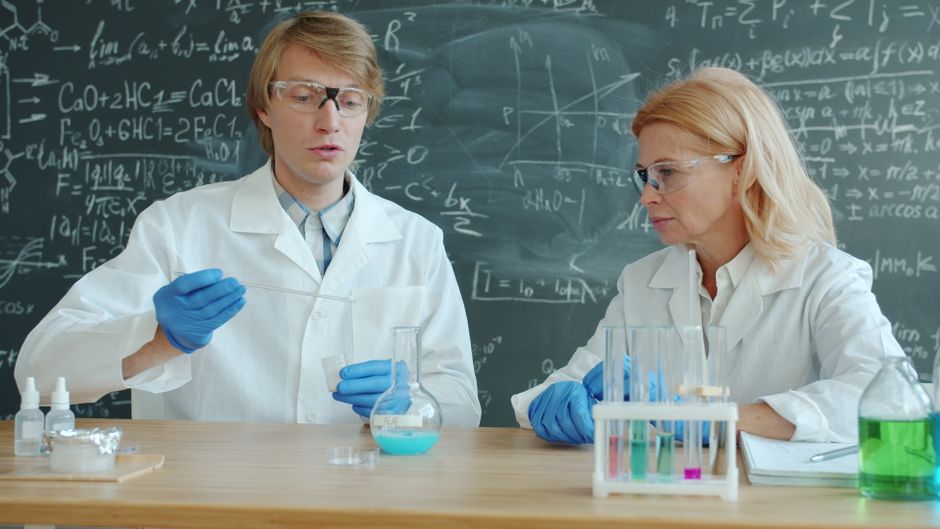
Photo by Vitaly Gariev on Pexels
The most crucial rule in chemistry is the Law of Conservation of Mass, which states that matter cannot be created or destroyed in a chemical reaction. This means the total number of atoms of each element must be the same on both sides of the equation. This is where balancing comes in.
To balance an equation, you place coefficients (numbers) in front of the chemical formulas. You can never change the subscripts within a chemical formula because that would change the substance itself (e.g., H₂O is water, H₂O₂ is hydrogen peroxide – very different!).
Let's look at the process for balancing an equation:
graph TD
    A["Identify Reactants & Products"] --> B["Write Unbalanced Equation (formulas & states)"];
    B --> C["Count Atoms of Each Element (left & right)"];
    C --> D{"Are Atoms Balanced?"};
    D -- "No" --> E["Add Coefficients to Balance Atoms"];
    E -- "Repeat for each element" --> C;
    D -- "Yes" --> F["Final Check of All Atoms"];
    F --> G["Balanced Chemical Equation"];
When balancing, it's often helpful to balance elements that appear in only one reactant and one product first. Save elements like oxygen and hydrogen (especially if they appear in multiple compounds) for later.
Types of Reactions (Brief Overview)
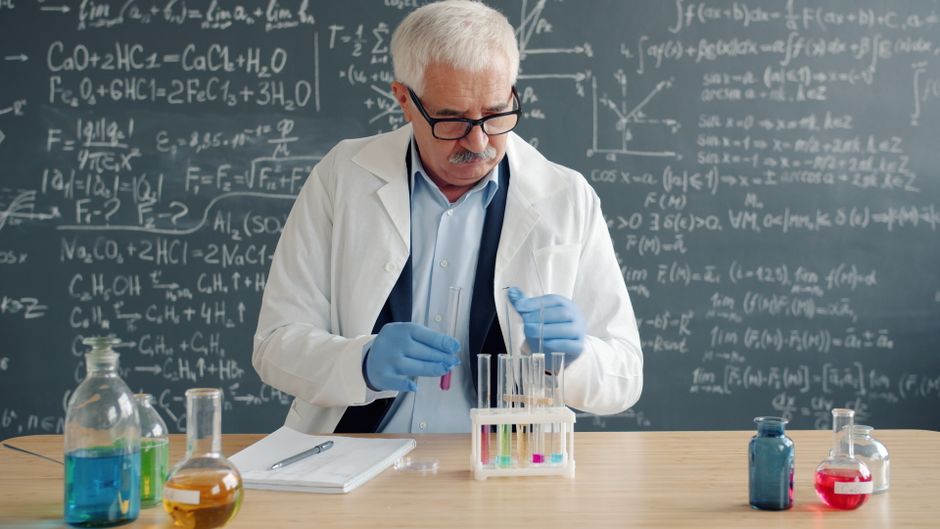
Photo by Vitaly Gariev on Pexels
While there are many types, here are a few common ones you'll encounter:
- Synthesis (Combination): Two or more reactants combine to form a single, more complex product.
- A + B → AB
- Decomposition: A single compound breaks down into two or more simpler substances.
- AB → A + B
- Single Replacement (Displacement): One element replaces another element in a compound.
- A + BC → AC + B
- Double Replacement (Displacement): The positive ions (cations) of two ionic compounds swap places.
- AB + CD → AD + CB
- Combustion: A substance reacts rapidly with oxygen, usually producing heat and light (fire!). Often involves hydrocarbons reacting with O₂ to produce CO₂ and H₂O.
3. Worked Example
Let's balance the combustion of propane (C₃H₈) gas.
Step 1: Write the unbalanced equation with formulas and states.
C₃H₈(g) + O₂(g) → CO₂(g) + H₂O(g)
Step 2: Count atoms on each side.
- Reactant Side (Left):
- C: 3
- H: 8
- O: 2
- Product Side (Right):
- C: 1
- H: 2
- O: 2 (from CO₂) + 1 (from H₂O) = 3
Step 3: Balance Carbon.
We have 3 Carbons on the left and 1 on the right. Add a coefficient of 3 in front of CO₂.
C₃H₈(g) + O₂(g) → 3CO₂(g) + H₂O(g)
Step 4: Re-count atoms.
- Reactant Side (Left):
- C: 3
- H: 8
- O: 2
- Product Side (Right):
- C: 3 (from 3CO₂)
- H: 2
- O: 3 × 2 (from 3CO₂) + 1 (from H₂O) = 6 + 1 = 7
Step 5: Balance Hydrogen.
We have 8 Hydrogens on the left and 2 on the right. Add a coefficient of 4 in front of H₂O.
C₃H₈(g) + O₂(g) → 3CO₂(g) + 4H₂O(g)
Step 6: Re-count atoms.
- Reactant Side (Left):
- C: 3
- H: 8
- O: 2
- Product Side (Right):
- C: 3 (from 3CO₂)
- H: 4 × 2 (from 4H₂O) = 8
- O: 3 × 2 (from 3CO₂) + 4 × 1 (from 4H₂O) = 6 + 4 = 10
Step 7: Balance Oxygen.
We have 2 Oxygens on the left and 10 on the right. Add a coefficient of 5 in front of O₂.
C₃H₈(g) + 5O₂(g) → 3CO₂(g) + 4H₂O(g)
Step 8: Final Check.
- Reactant Side (Left):
- C: 3
- H: 8
- O: 5 × 2 = 10
- Product Side (Right):
- C: 3
- H: 8
- O: 6 + 4 = 10
All atoms are balanced!
4. Key Takeaways
- Chemical reactions transform reactants into products by rearranging atoms.
- Chemical equations use formulas and coefficients to represent these transformations.
- The Law of Conservation of Mass dictates that atoms are never created or destroyed in a reaction.
- Balancing equations ensures that the number of atoms of each element is equal on both sides.
- Coefficients are placed in front of chemical formulas to balance atoms, never change subscripts.
- State symbols (s, l, g, aq) provide additional information about the substances.
Common Mistakes to Avoid:
- Don't change the subscripts in a chemical formula when balancing; this changes the compound itself.
- Forgetting to count all atoms of an element if it appears in multiple compounds on one side of the equation.
- Not doing a final check of all elements after you think you're done balancing.
- Writing a reaction as "reactants = products" instead of "reactants → products".
5. Now Try It
Take the unbalanced reaction for the formation of ammonia: N₂(g) + H₂(g) → NH₃(g). Your task is to balance this equation, showing each step of counting and adding coefficients. Once balanced, double-check that the number of Nitrogen and Hydrogen atoms is the same on both sides. Success looks like a balanced equation where the law of conservation of mass is perfectly represented.
Frequently asked about Introduction to Chemical Reactions and Equations
Study this next
Get the full CHEMISTRY curriculum
Clone the complete plan to your dashboard for unlimited AI-generated notes, practice quizzes, and a personalised revision schedule.
Save this course free