Review and Application of Atomic Theory Concepts
From the Chemistry journey of atoms curriculum
TL;DR
Atoms are the fundamental building blocks of matter, composed of protons, neutrons, and electrons, each with distinct properties. Understanding an atom's composition (atomic number, mass number) helps you predict its chemical behavior and identify isotopes. We'll review these basics and apply them to understand how atoms interact and form different substances.
1. The Mental Model
Think of an atom like a tiny solar system. There's a dense nucleus (the "sun") at the center, containing protons and neutrons, and electrons (the "planets") whizzing around it in specific energy levels. The number and arrangement of these particles determine what kind of atom it is and how it behaves.
2. The Core Material
You've learned that atoms aren't just tiny, indivisible balls. They have internal structure! Let's quickly recap the key players and what they mean for an atom.
Subatomic Particles

Photo by Nicola Narracci on Pexels
- Protons (p⁺): Positively charged, located in the nucleus. The number of protons defines the element (its atomic number, Z). If an atom has 6 protons, it's always carbon.
- Neutrons (n⁰): No charge (neutral), located in the nucleus. They add mass but don't change the element.
- Electrons (e⁻): Negatively charged, orbit the nucleus in electron shells or energy levels. In a neutral atom, the number of electrons equals the number of protons.
Atomic Number (Z) and Mass Number (A)
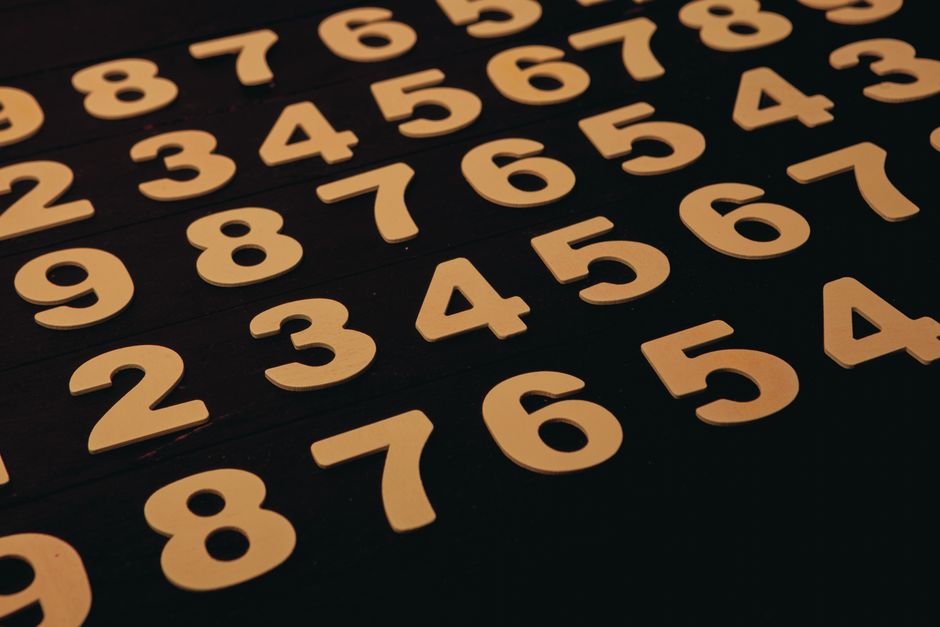
Photo by Roman Friptuleac on Pexels
- Atomic Number (Z): This is simply the number of protons in an atom's nucleus. It's unique to each element and is typically found above the element symbol on the periodic table.
- Mass Number (A): This is the total number of protons + neutrons in an atom's nucleus. It tells you the approximate mass of that specific atom.
Isotopes
Atoms of the same element (meaning they have the same number of protons) can have different numbers of neutrons. These variations are called isotopes. They have the same chemical properties but different masses. For example, Carbon-12 has 6 protons and 6 neutrons, while Carbon-14 has 6 protons and 8 neutrons. Both are carbon.
Ions
Atoms can gain or lose electrons, becoming electrically charged particles called ions.
* Cations: Formed when an atom loses electrons, resulting in a net positive charge (more protons than electrons).
* Anions: Formed when an atom gains electrons, resulting in a net negative charge (more electrons than protons).
Let's visualize how these concepts connect:
graph TD
    A["Atom Identity"] --> B["Number of Protons (Atomic Number, Z)"];
    B --> C["Element Symbol"];
    A --> D["Number of Neutrons"];
    A --> E["Number of Electrons"];

    B & D --> F["Mass Number (A) = Protons + Neutrons"];
    D --> G{"Isotope?"};
    G -- "Yes, if Z is same but D is different" --> F;

    B & E --> H{"Neutral Atom?"};
    H -- "Yes, if Protons = Electrons" --> I["No Net Charge"];
    H -- "No, if Protons != Electrons" --> J["Ion"];
    J --> K["Cation (Lost electrons, +ve)"];
    J --> L["Anion (Gained electrons, -ve)"];
Electron Configuration and Reactivity

Photo by panumas nikhomkhai on Pexels
The arrangement of electrons in shells is called the electron configuration. The electrons in the outermost shell are called valence electrons, and they are the key to an atom's chemical reactivity. Atoms tend to gain, lose, or share valence electrons to achieve a stable electron configuration, often a full outer shell (like the noble gases). This is what drives chemical bonding.
3. Worked Example
Let's take an atom of Bromine with a mass number of 80 and a charge of -1. We want to determine its composition.
- Identify the element: Look up Bromine (Br) on the periodic table. Its atomic number (Z) is 35. This means it has 35 protons.
- Determine electrons: Since the charge is -1, it has gained one electron. A neutral Bromine atom would have 35 electrons (equal to protons). So, with a -1 charge, it has 35 + 1 = 36 electrons.
- Determine neutrons: The mass number (A) is 80. We know A = protons + neutrons. So, 80 = 35 + neutrons. This means it has 80 - 35 = 45 neutrons.
So, a Bromine-80 ion with a -1 charge has: 35 protons, 45 neutrons, and 36 electrons.
4. Key Takeaways
- The number of protons uniquely defines an element (its atomic number, Z).
- The mass number (A) is the sum of protons and neutrons in the nucleus.
- Isotopes are atoms of the same element with different numbers of neutrons.
- Ions are charged atoms formed by gaining (anion) or losing (cation) electrons.
- Valence electrons dictate an atom's chemical behavior and how it forms bonds.
- A neutral atom always has an equal number of protons and electrons.
- The nucleus contains protons and neutrons, while electrons orbit outside.
Common Mistakes to Avoid:
- Confusing atomic number (protons) with mass number (protons + neutrons).
- Forgetting that changing neutrons creates an isotope, but doesn't change the element.
- Mixing up electron count for ions – a negative charge means more electrons, not fewer.
- Assuming mass number is always the average atomic mass from the periodic table (that's for naturally occurring mixtures of isotopes).
5. Now Try It
Consider an atom with 17 protons, 18 neutrons, and 18 electrons.
1. What is the element?
2. What is its mass number?
3. Is it a neutral atom or an ion? If it's an ion, what is its charge?
4. Write its full symbol (e.g., ¹²C or ¹⁹F⁻).
What success looks like: You can correctly identify the element from its proton count, calculate its mass number, determine if it's an ion and its charge, and write out the proper symbolic representation.
Frequently asked about Review and Application of Atomic Theory Concepts
More from Chemistry journey of atoms
Get the full Chemistry journey of atoms curriculum
Clone the complete plan to your dashboard for unlimited AI-generated notes, practice quizzes, and a personalised revision schedule.
Save this course free