Ions, States of Matter, and Solubility Rules
From the Chem curriculum
TL;DR
Atoms can gain or lose electrons to become charged ions, which affects how they interact. Substances exist in different states of matter (solid, liquid, gas, plasma) depending on energy and particle arrangement. Solubility rules help predict if an ionic compound will dissolve in water.
1. The Mental Model
Think of atoms like tiny building blocks; sometimes they have an extra "hand" (electron) or are missing one, making them charged (ions). How tightly these blocks are packed or how freely they move determines if they're a solid, liquid, or gas. When you mix them with water, some charged blocks love to spread out, while others prefer to stick together.
2. The Core Material
2.1 What are Ions?

Photo by Ann H on Pexels
An ion is simply an atom or molecule that has a net electrical charge due to gaining or losing one or more electrons.
* Cations are positively charged ions (they've lost electrons). Think "cats have paws" – positive.
* Example: Sodium (Na) loses one electron to become Na⁺.
* Anions are negatively charged ions (they've gained electrons).
* Example: Chlorine (Cl) gains one electron to become Cl⁻.
When atoms become ions, their chemical properties change significantly. Ionic compounds are formed when oppositely charged ions attract each other (like Na⁺ and Cl⁻ forming NaCl).
2.2 States of Matter

Photo by Ron Lach on Pexels
Matter exists in different physical forms, or states, depending on the energy of its particles and how they're arranged.
* Solid: Particles are tightly packed in a fixed arrangement, vibrating in place. They have a definite shape and volume. (e.g., ice)
* Liquid: Particles are close together but can move past each other. They have a definite volume but take the shape of their container. (e.g., water)
* Gas: Particles are far apart and move randomly and rapidly. They have no definite shape or volume, expanding to fill their container. (e.g., steam)
* Plasma: An ionized gas where electrons are stripped from atoms. It's the most common state of matter in the universe (stars). (e.g., lightning)
The transitions between these states (melting, freezing, boiling, condensing, subliming, depositing) involve adding or removing energy.
2.3 Solubility Rules: When Will It Dissolve?
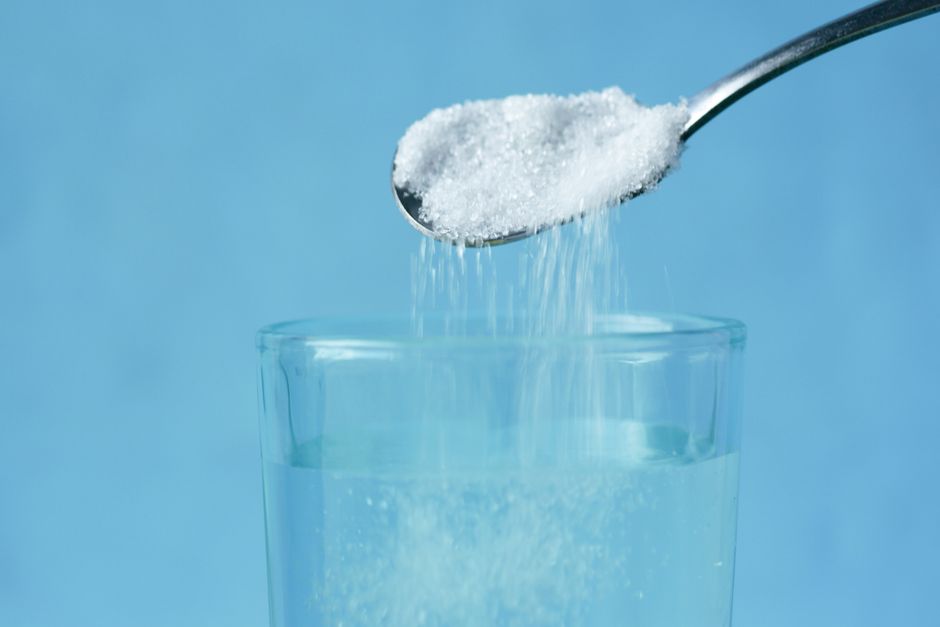
Photo by Towfiqu barbhuiya on Pexels
Solubility refers to the maximum amount of a substance (the solute) that will dissolve in a given amount of another substance (the solvent) at a specific temperature. For ionic compounds in water, we use a set of solubility rules to predict if they'll dissolve. "Dissolve" here means separating into individual ions in the water.
Here's a simplified way to think about it:
graph TD
    A["Ionic Compound in Water?"] --> B{Contains Alkali Metal (Li⁺, Na⁺, K⁺) or NH₄⁺?}
    B -- Yes --> C["Generally Soluble"]
    B -- No --> D{Contains Nitrate (NO₃⁻), Acetate (CH₃COO⁻), or Perchlorate (ClO₄⁻)?}
    D -- Yes --> C
    D -- No --> E{Contains Cl⁻, Br⁻, I⁻?}
    E -- Yes --> F{Is the positive ion Ag⁺, Pb²⁺, or Hg₂²⁺?}
    F -- Yes --> G["Generally Insoluble"]
    F -- No --> C
    E -- No --> H{Contains SO₄²⁻?}
    H -- Yes --> I{Is the positive ion Sr²⁺, Ba²⁺, Pb²⁺?}
    I -- Yes --> G
    I -- No --> C
    H -- No --> J{Contains OH⁻ or S²⁻?}
    J -- Yes --> K{Is the positive ion an Alkali Metal, Ba²⁺, Sr²⁺, Ca²⁺, or NH₄⁺?}
    K -- Yes --> C
    K -- No --> G
    J -- No --> L{Contains CO₃²⁻ or PO₄³⁻?}
    L -- Yes --> M{Is the positive ion an Alkali Metal or NH₄⁺?}
    M -- Yes --> C
    M -- No --> G
    L -- No --> X["Need more specific rules for other ions"]
Key concept: If a compound is "soluble," it will dissolve and form aqueous ions (e.g., NaCl(s) → Na⁺(aq) + Cl⁻(aq)). If it's "insoluble," it will remain a solid (form a precipitate).
3. Worked Example
Let's predict if Lead(II) Chloride (PbCl₂) is soluble in water.
- Identify the ions: We have Lead(II) (Pb²⁺) and Chloride (Cl⁻).
- Consult the solubility rules:
- We look for compounds containing Cl⁻. The rule states that chlorides are generally soluble.
- However, there's an exception: Chlorides are insoluble if the positive ion is Ag⁺, Pb²⁺, or Hg₂²⁺.
- Apply the exception: Since our positive ion is Pb²⁺, Lead(II) Chloride falls under this exception.
- Conclusion: PbCl₂ is insoluble in water. If you mixed solid PbCl₂ with water, it would remain a solid and likely settle at the bottom.
4. Key Takeaways
- Ions are atoms or molecules with a net positive (cation) or negative (anion) charge due to electron loss or gain.
- Solids have fixed shapes and volumes, liquids have fixed volumes but variable shapes, and gases have variable shapes and volumes.
- Energy changes (like heating or cooling) cause matter to transition between solid, liquid, and gas states.
- Solubility rules help predict if an ionic compound will dissolve in water to form separate ions.
- Most compounds containing alkali metals (Na⁺, K⁺) or nitrate (NO₃⁻) are soluble.
- Most chlorides (Cl⁻) are soluble, except those with silver (Ag⁺), lead (Pb²⁺), or mercury(I) (Hg₂²⁺).
- Most hydroxides (OH⁻) and sulfides (S²⁻) are insoluble, except those with alkali metals or certain alkaline earth metals.
Common Mistakes to Avoid:
- Confusing cations and anions – remember "cats have paws" (positive).
- Assuming all ionic compounds are soluble; many are not.
- Forgetting the exceptions to solubility rules, which are often just as important as the rules themselves.
- Thinking that "insoluble" means nothing dissolves; a tiny, unnoticeable amount might still dissolve.
5. Now Try It
Predict whether Sodium Carbonate (Na₂CO₃) and Barium Sulfate (BaSO₄) are soluble or insoluble in water. For each, identify the ions involved and which solubility rule (and any exceptions) leads you to your conclusion.
Success looks like: For each compound, you've correctly identified the ions, stated whether it's soluble or insoluble, and briefly explained why using the solubility rules.
Frequently asked about Ions, States of Matter, and Solubility Rules
Study this next
Get the full Chem curriculum
Clone the complete plan to your dashboard for unlimited AI-generated notes, practice quizzes, and a personalised revision schedule.
Save this course free