States of Matter & Experimental Techniques
From the IGCSE CHEMISTRY curriculum
States of Matter & Experimental Techniques
TL;DR
Matter exists in three main states – solid, liquid, and gas – differing in particle arrangement and energy. You can separate mixtures using various experimental techniques based on the physical properties of their components. Understanding these states and separation methods is crucial for practical chemistry.
1. The Mental Model
Think of particles as tiny balls. In solids, they're tightly packed and just vibrate. In liquids, they're close but can slide past each other. In gases, they're far apart and move randomly and quickly.
2. The Core Material
Matter is anything that has mass and occupies space. It primarily exists in three states: solid, liquid, and gas. These states are defined by how their particles (atoms, molecules, or ions) are arranged and move.
2.1 States of Matter
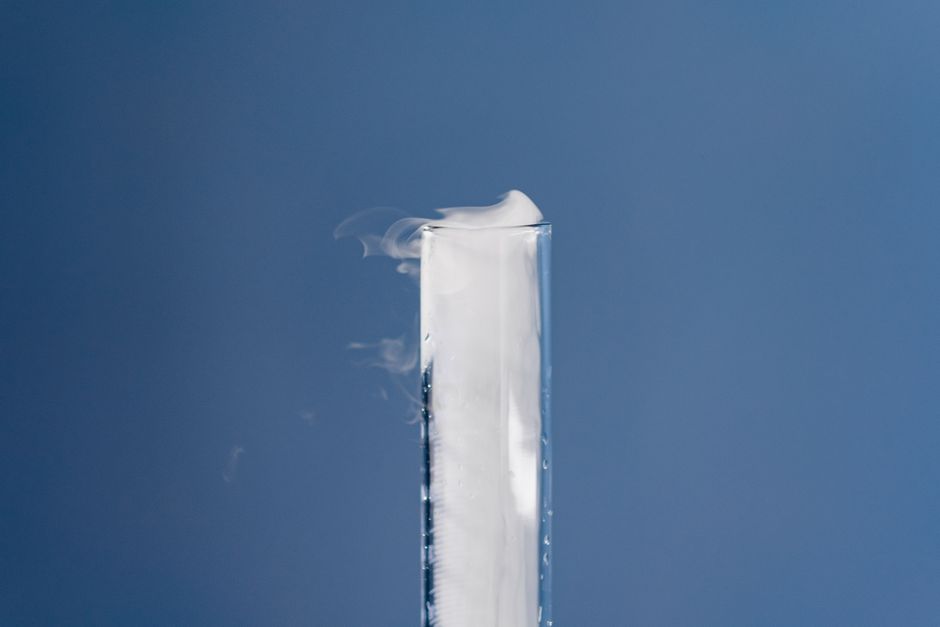
Photo by Ron Lach on Pexels
Solids:
* Particles are tightly packed in a regular arrangement (lattice).
* They vibrate about fixed positions.
* Have a fixed shape and fixed volume.
* High density.
* Cannot be compressed.
Liquids:
* Particles are close together but randomly arranged.
* They can slide past each other.
* Have a fixed volume but take the shape of their container.
* Moderate density.
* Cannot be easily compressed.
Gases:
* Particles are far apart and randomly arranged.
* They move rapidly and randomly in all directions.
* Have no fixed shape or volume; they fill their container.
* Low density.
* Can be easily compressed.
Changes between these states are physical changes, meaning no new substances are formed. They are caused by changes in temperature and pressure.
graph TD
    A["Solid (fixed shape/volume)"] --> B["Liquid (fixed volume, variable shape)"]
    B --> C["Gas (variable shape/volume)"]
    C --> B
    B --> A

    A -- "Melting" --> B
    B -- "Boiling/Evaporation" --> C
    C -- "Condensing" --> B
    B -- "Freezing" --> A
    A -- "Sublimation" --> C
    C -- "Deposition" --> A
2.2 Experimental Techniques for Separation
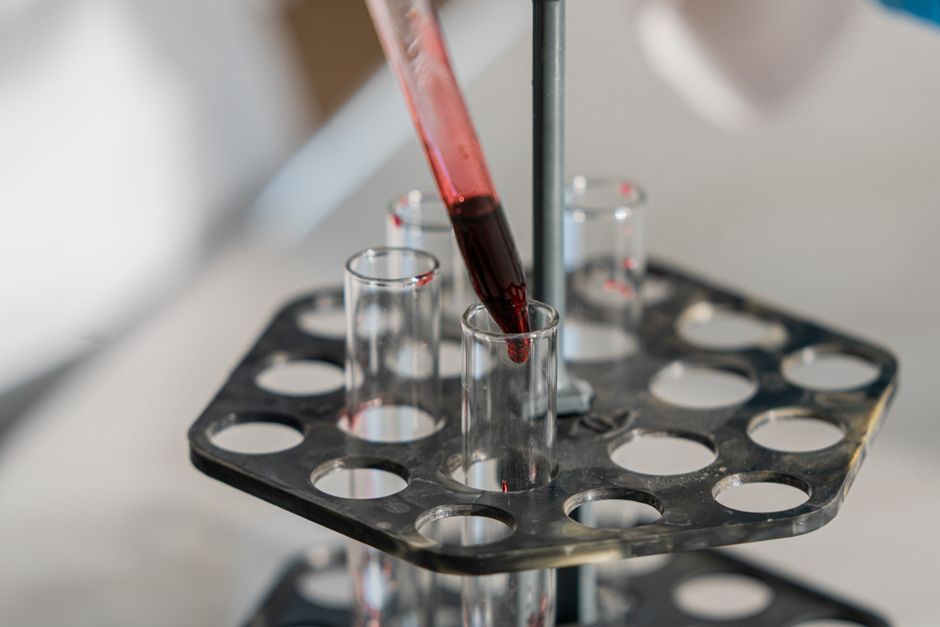
Photo by Ivan S on Pexels
Different techniques are used to separate mixtures based on differences in physical properties like boiling point, solubility, particle size, or magnetism.
Filtration
- Purpose: Separating an insoluble solid from a liquid.
- Principle: Particle size difference. The liquid (filtrate) passes through a filter paper, while the solid (residue) is retained.
- Example: Separating sand from water.
Crystallisation
- Purpose: Obtaining a soluble solid from a solution.
- Principle: Solubility difference with temperature. Heat the solution to evaporate some solvent, creating a saturated solution. Cool it to force the solute to crystallise out.
- Example: Obtaining salt from saltwater.
Simple Distillation
- Purpose: Separating a liquid from a dissolved solid, or two liquids with significantly different boiling points (at least 25°C difference).
- Principle: Boiling point difference. The mixture is heated, the liquid with the lower boiling point evaporates, condenses, and is collected.
- Example: Obtaining pure water from seawater.
Fractional Distillation
- Purpose: Separating two or more liquids with close boiling points.
- Principle: Repeated vaporisation and condensation cycles within a fractionating column. The column provides a large surface area for this to happen, allowing for better separation.
- Example: Separating ethanol and water, or crude oil into fractions.
Chromatography (Paper or Thin Layer)
- Purpose: Separating components of a mixture that have different solubilities in a solvent and different affinities for a stationary phase.
- Principle: Differential movement. A mobile phase (solvent) carries the mixture through a stationary phase (e.g., paper). Components travel at different speeds based on their solubility and adsorption.
- Example: Separating colours in ink or amino acids.
Decantation
- Purpose: Separating immiscible liquids or a liquid from a heavy, settled solid.
- Principle: Density difference. The denser component settles, and the less dense liquid is carefully poured off.
- Example: Separating oil and water after they've settled.
Magnetic Separation
- Purpose: Separating magnetic substances from non-magnetic ones.
- Principle: Magnetism. A magnet is used to attract and remove magnetic components from a mixture.
- Example: Separating iron filings from sulfur powder.
3. Worked Example
You have a mixture of iron filings, sand, and salt. Describe how you would separate these three components to get them back as pure substances.
- Separate iron filings: Use a magnet to attract and remove the iron filings. Iron is magnetic, while sand and salt are not.
- Separate sand from salt: Add water to the remaining mixture of sand and salt. Stir well. Salt will dissolve in the water, forming a saltwater solution, while sand will not dissolve and will sink to the bottom.
- Separate sand: Filter the mixture. The sand (insoluble solid) will be left on the filter paper as residue. The saltwater solution (filtrate) will pass through. Wash the sand with distilled water and dry it.
- Obtain salt: Take the saltwater solution. Heat it gently to evaporate the water. As the water evaporates, the salt will crystallise out. Collect the dry salt crystals.
4. Key Takeaways
- The three states of matter (solid, liquid, gas) differ in particle arrangement, movement, and energy.
- Changes between states are physical processes, not chemical reactions.
- Filtration separates insoluble solids from liquids based on particle size.
- Crystallisation recovers a soluble solid from a solution by evaporating solvent and cooling.
- Distillation (simple or fractional) separates liquids based on boiling point differences.
- Chromatography separates components based on differing solubilities and adsorption to a stationary phase.
- Choose the separation technique based on the specific physical properties of the mixture's components.
5. Now Try It
You have a mixture of copper sulfate powder, sand, and water. Describe a step-by-step process using common laboratory techniques to separate these three components and recover each pure substance. Explain the principle behind each step. What success looks like: You should have three separate, pure substances and be able to justify each separation choice.
Frequently asked about States of Matter & Experimental Techniques
Get the full IGCSE CHEMISTRY curriculum
Clone the complete plan to your dashboard for unlimited AI-generated notes, practice quizzes, and a personalised revision schedule.
Create Free Account