Foundational Physics: Mechanics and Thermodynamics
From the Science curriculum
Foundational Physics: Mechanics and Thermodynamics
TL;DR
Mechanics deals with how objects move and interact, governed by forces. Thermodynamics explains heat, temperature, and energy transfer. Together, these fields form the basis for understanding how the physical world works.
1. The Mental Model
Imagine everything around you as a collection of tiny particles that move, push, and pull on each other. Mechanics tells us how these pushes and pulls affect their movement, while thermodynamics describes how energy, especially heat, flows between them.
2. The Core Material
2.1 Mechanics: Understanding Motion and Force

Photo by Jose Manuel Gonzalez Lupiañez Photography on Pexels
Mechanics is all about motion and forces. You've probably heard of Newton's Laws of Motion, and they're central here:
- First Law (Inertia): An object at rest stays at rest, and an object in motion stays in motion with the same speed and in the same direction, unless acted upon by an unbalanced force. Think about pushing a heavy box; it doesn't move until you apply enough force.
- Second Law (F=ma): The force (F) acting on an object is equal to its mass (m) times its acceleration (a). This is the most famous one! More force means more acceleration for a given mass, or a heavier object needs more force to accelerate the same amount.
- Third Law (Action-Reaction): For every action, there is an equal and opposite reaction. When you push against a wall, the wall pushes back on you with the same force.
We also look at energy in mechanics, specifically kinetic energy (energy of motion) and potential energy (stored energy, like gravitational potential energy when you lift something). The conservation of energy is a huge concept: energy can't be created or destroyed, only changed from one form to another.
Key Mechanics Concepts:
- Displacement: How far an object is from its starting point, including direction.
- Velocity: Speed with a direction.
- Acceleration: The rate at which velocity changes.
- Force: A push or a pull.
- Work: Force applied over a distance.
- Power: The rate at which work is done.
2.2 Thermodynamics: The Science of Heat and Energy
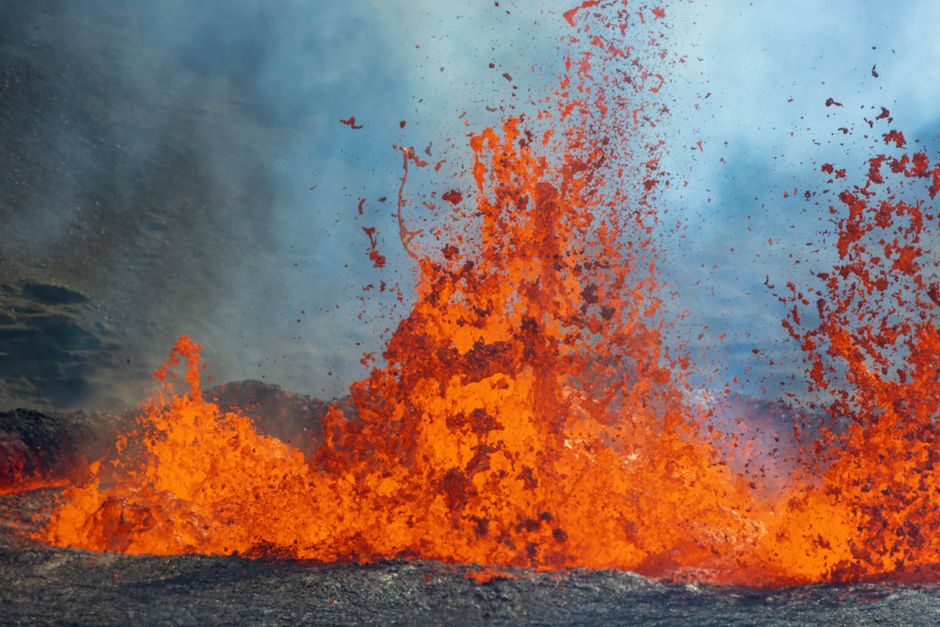
Photo by Rino Adamo on Pexels
Thermodynamics is about heat, temperature, and energy transfer. It explains why things get hot or cold, and how we can use that energy.
The Four Laws of Thermodynamics:
- Zeroth Law: If two systems are each in thermal equilibrium with a third system, they are in thermal equilibrium with each other. This is how thermometers work! If the thermometer is in equilibrium with your arm, and your arm is in equilibrium with the room, then the thermometer is also in equilibrium with the room.
- First Law (Conservation of Energy): Energy cannot be created or destroyed, only transferred or changed from one form to another. This is the same principle as in mechanics, but often applied to heat and internal energy. Think about heating water – you're adding energy to it.
- Second Law (Entropy): The total entropy (disorder) of an isolated system can only increase over time, or remain constant in ideal cases. This means things tend to move from order to disorder. Your room tends to get messy, not spontaneously tidy. Heat also naturally flows from hot to cold, not the other way around.
- Third Law: As a system approaches absolute zero temperature, the entropy of the system approaches a minimum value. Essentially, at absolute zero, all molecular motion stops, leading to minimum disorder.
Key Thermodynamics Concepts:
- Temperature: A measure of the average kinetic energy of the particles in a substance.
- Heat: The transfer of thermal energy between objects due to a temperature difference.
- Internal Energy: The total energy contained within a system, including kinetic and potential energy of its molecules.
- Entropy: A measure of disorder or randomness in a system.
Here's how these two main branches relate to each other:
graph TD
    A["Physics"] --> B["Mechanics (Motion & Forces)"]
    A --> C["Thermodynamics (Heat & Energy Transfer)"]
    B --> B1["Newton's Laws"]
    B --> B2["Conservation of Energy (Mechanical)"]
    C --> C1["Laws of Thermodynamics"]
    C --> C2["Conservation of Energy (Thermal)"]
    B1 --> B1a["F = ma"]
    C1 --> C1a["Heat flows hot -> cold"]
    B2 --> C2_link["Energy is interconvertible"]
    C2_link --> B2
3. Worked Example
Let's say you're pushing a shopping cart.
-
Mechanics: You apply a force of 50 Newtons (N) to a shopping cart with a mass of 20 kg. What's its acceleration?
Using Newton's Second Law: F = ma.
So, a = F / m = 50 N / 20 kg = 2.5 meters per second squared (m/s²). -
Thermodynamics: After pushing the cart for a while, you notice the wheels feel slightly warm. Why?
Due to friction between the wheels and their axles, and between the wheels and the ground, some of the mechanical energy you're putting into pushing the cart is converted into thermal energy (heat). This is an example of the First Law of Thermodynamics (conservation of energy) – the energy isn't lost, just transformed from kinetic energy into heat energy, making the wheels warmer. The Second Law also plays a role as this energy transformation increases the overall entropy of the system (cart + surroundings).
4. Key Takeaways
- Mechanics studies how forces cause objects to move and interact.
- Newton's Laws are fundamental to understanding motion and forces.
- Thermodynamics focuses on heat, temperature, and energy transfer.
- The Laws of Thermodynamics govern how energy behaves in terms of heat and disorder.
- The First Law of Thermodynamics (conservation of energy) is a unifying principle across both mechanics and thermodynamics.
- Energy can change forms (e.g., kinetic to heat) but is never truly lost or gained.
- Entropy, a measure of disorder, tends to increase in isolated systems.
Common Mistakes to Avoid:

Photo by KATRIN BOLOVTSOVA on Pexels
- Confusing force with pressure; force is a push/pull, pressure is force per unit area.
- Thinking 'heat' is the same as 'temperature'; temperature is an average of kinetic energy, heat is energy transfer.
- Believing that systems naturally become more ordered without external input.
- Forgetting that the conservation of energy applies to all forms of energy, not just mechanical or thermal.
5. Now Try It
Imagine you drop a ball from a certain height. Describe, using concepts from both mechanics and thermodynamics, what happens to the ball's energy from the moment you let go until it comes to a complete stop on the ground. Think about how its energy changes forms and where that energy ultimately goes. Success looks like clearly explaining the energy transformations at each stage, referencing specific laws or principles you've learned.
Frequently asked about Foundational Physics: Mechanics and Thermodynamics
Get the full Science curriculum
Clone the complete plan to your dashboard for unlimited AI-generated notes, practice quizzes, and a personalised revision schedule.
Create Free Account