Introduction to the Spanish Language: History and Origins
From the FOREIGN LANGUAGE curriculum
Introduction to the Spanish Language: History and Origins
TL;DR
Spanish, also known as Castilian, evolved from Vulgar Latin spoken on the Iberian Peninsula. Its extensive vocabulary and grammar owe much to Roman, Germanic, and Arabic influences. Today, it's one of the most widely spoken languages globally, with rich cultural variations.
1. The Mental Model
Think of Spanish as a linguistic descendant of Latin, like a child inheriting traits from a parent. This child then grew up in a diverse neighborhood, picking up vocabulary and habits from different cultures it met along the way.
2. The Core Material
Spanish didn't just appear out of nowhere; it's the result of centuries of historical and cultural shifts. To understand Spanish today, you've got to look back at its roots.
The Roman Foundation (Vulgar Latin)

Photo by cottonbro studio on Pexels
The story really kicks off when the Romans conquered the Iberian Peninsula (modern-day Spain and Portugal) starting in the 3rd century BCE. They brought with them Latin, but not the classical Latin of literature. Instead, it was Vulgar Latin, the everyday language of soldiers, merchants, and colonists. This Vulgar Latin became the bedrock for all Romance languages, including Spanish. Over time, as Rome's influence waned, this spoken Latin started to evolve locally, leading to distinct regional dialects.
Germanic Influences

Photo by Markus Winkler on Pexels
After the fall of the Roman Empire, various Germanic tribes, like the Visigoths, moved into the Iberian Peninsula in the 5th century CE. While they adopted Latin for administration and religion, their languages did leave a small mark on the evolving Spanish. You'll find a few Spanish words of Germanic origin, often related to war or legal terms.
The Arab Impact (Al-Andalus)

Photo by Zak Chapman on Pexels
One of the most significant influences on Spanish came with the Moorish (Arab and Berber) conquest of most of the Iberian Peninsula in 711 CE. Their rule, lasting nearly 800 years in some areas, profoundly shaped the language and culture. Arabic became a prestigious language, and many Arabic words were borrowed into Spanish, especially those related to science, agriculture, administration, and everyday items. Words often starting with "al-" (like álgebra, algodón, alfombra) usually have Arabic roots.
The Rise of Castilian
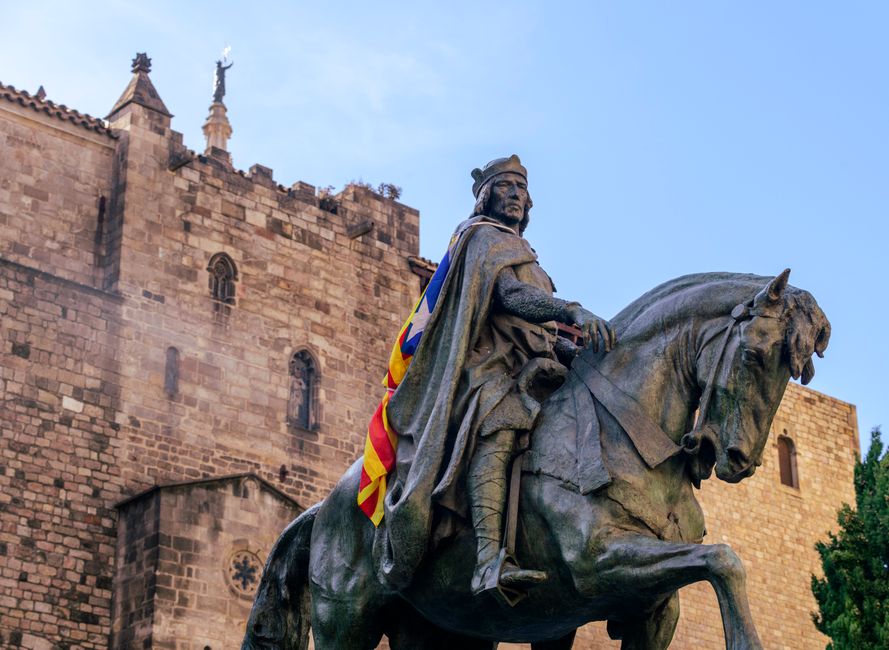
Photo by Samuel Sweet on Pexels
During the Reconquista (the Christian re-conquest of Spain), the dialect spoken in the northern kingdom of Castile (Castilian) gradually gained prominence. As Castilian rulers expanded their territory south, their dialect expanded with them, absorbing features from other Iberian Romance dialects and Arabic. By the time of the unification of Spain under the Catholic Monarchs in the late 15th century, Castilian had become the dominant language, leading to it being known broadly as Spanish.
graph LR
    A["Roman Conquest (3rd c. BCE)"] --> B["Vulgar Latin in Iberia"]
    B --> C{"External Influences"};
    C --> D["Germanic Tribes (5th c. CE)"]
    C --> E["Moorish Conquest (8th c. CE)"];
    D --> F["Minor Germanic Loanwords"];
    E --> G["Significant Arabic Loanwords"];
    B --> H["Regional Latin Dialects Develop"]
    H --> I["Castilian Dialect Emerges (Northern Iberia)"]
    I --> J["Reconquista / Expansion of Castile"]
    I --> K["Unification of Spain (15th c.)"]
    J --> L["Castilian Becomes Dominant"]
    K --> L
    L --> M["Modern Spanish (Castilian)"]
    F --> M
    G --> M
The Spanish Empire and Global Spread
The voyages of Columbus in 1492, coinciding with the completion of the Reconquista and the publication of the first Spanish grammar, marked the beginning of Spanish's global spread. Spanish explorers, missionaries, and settlers carried the language across the Americas, the Philippines, and other parts of the world, leading to the vast linguistic diversity within the Spanish-speaking world we see today.
3. Worked Example
Let's look at the etymology of a common Spanish word: azúcar (sugar).
- Roman Roots (Indirect): The Latin word was saccharum, which itself came from Greek and Sanskrit.
- Arabic Influence: When the Moors brought sugar cane cultivation to Spain, they also brought their word for sugar: as-sukkar.
- Assimilation into Castilian: The Castilian dialect adopted as-sukkar, and over time, it evolved into azúcar. The "z" sound often represents a development from Arabic "s" or "z" sounds, and the "a-" prefix is a direct carryover from the Arabic definite article al-. This shows how layers of history built up the word.
4. Key Takeaways
- Spanish is a Romance language, directly descended from the Vulgar Latin spoken by the Romans.
- Its development was significantly shaped by the Moorish presence on the Iberian Peninsula, adding many words of Arabic origin.
- The Castilian dialect rose to prominence during the Reconquista, becoming the foundation of modern Spanish.
- The dialect's spread intensified after the unification of Spain and the discovery of the Americas.
- Understanding these origins helps explain many vocabulary patterns and some grammatical structures in Spanish.
Common Mistakes to Avoid
- Don't assume Spanish was always a unified language; it evolved from multiple influences.
- Don't underestimate the Arabic impact; it's much more significant than Germanic input.
- Don't confuse "Castilian" solely with the Spanish spoken in Spain; it's the name for the Spanish language itself.
- Don't think Spanish sprang into existence overnight; it's a product of centuries of change.
5. Now Try It
Spend 15 minutes finding 5-10 common Spanish words that start with "al-" (like alfombra, almohada) or contain "gu" (like guerra, guitarra, often Germanic-influenced). For each word, try to guess its origin (Roman/Latin, Arabic, or Germanic) based on what you've learned. What success looks like: You'll have a short list of words and a likely origin for each, demonstrating your growing sense for distinct linguistic influences.
Frequently asked about Introduction to the Spanish Language: History and Origins
Get the full FOREIGN LANGUAGE curriculum
Clone the complete plan to your dashboard for unlimited AI-generated notes, practice quizzes, and a personalised revision schedule.
Create Free Account