Foundational Reading Skills: Decoding and Fluency
From the reading curriculum
Foundational Reading Skills: Decoding and Fluency
TL;DR
Decoding helps you sound out unfamiliar words by understanding letter-sound relationships. Fluency means reading smoothly, accurately, and with good expression, allowing you to focus on meaning. Together, these skills are essential for truly understanding what you read.
1. The Mental Model
Think of decoding as learning the alphabet and its sounds. Fluency is then like practicing those sounds so much that you can read words and sentences without stumbling, similar to playing a musical instrument smoothly. Developing both skills makes reading easier and more enjoyable.
2. The Core Material
Reading well isn't just about knowing individual letters; it's about making sense of entire texts. This happens through two major foundational skills: decoding and fluency.
Decoding: Cracking the Code

Photo by cottonbro studio on Pexels
Decoding is the ability to translate written words into spoken language. It's how you figure out what a word says, especially one you haven't seen before. This involves understanding:
- Phonological Awareness: Recognizing and manipulating the sounds in spoken words. This is a pre-reading skill. For example, knowing that "cat" has three sounds: /c/, /a/, /t/.
- Phonics: The relationship between letters (graphemes) and sounds (phonemes). When you decode, you're applying phonics rules.
- Letter-Sound Correspondence: Knowing that 't' makes the /t/ sound, 'a' makes the /a/ sound, etc.
- Blending: Putting individual sounds together to form a word. (e.g., /c/ + /a/ + /t/ = "cat")
- Segmenting: Breaking a word down into its individual sounds. (e.g., "dog" = /d/ + /o/ + /g/)
- Syllabication: Breaking longer words into smaller, manageable chunks (syllables) to decode them. (e.g., "waterfall" = "wa-ter-fall")
- Sight Words: Words that appear frequently and are often learned by memorization rather than decoding each time (e.g., "the," "is," "and"). While not strictly decoding, knowing these speeds up reading significantly.
Essentially, decoding connects the visual (letters on a page) to the auditory (sounds).
Fluency: Reading with Flow
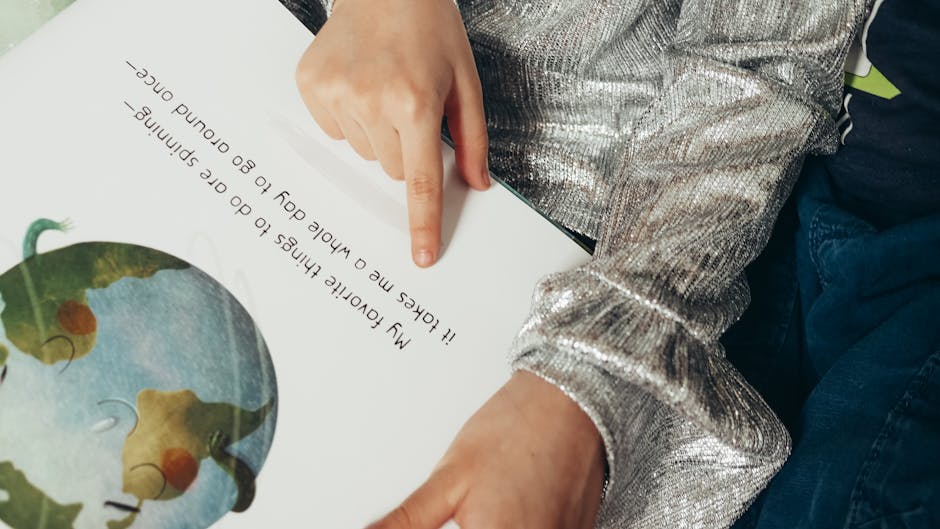
Photo by Kindel Media on Pexels
Fluency is the ability to read text accurately, quickly, and with appropriate expression. It's not just about speed; it's about reading in a way that sounds natural, like spoken conversation. The key components of fluency are:
- Accuracy: Reading words correctly without making mistakes. If you're constantly misreading words, understanding suffers.
- Rate (Speed): Reading at an appropriate pace, not too slow or too fast. A comfortable pace helps comprehension.
- Prosody (Expression): Reading with proper intonation, rhythm, and emphasis, reflecting the meaning of the text. This includes pausing at commas, stopping at periods, raising your voice for questions, and conveying emotion where appropriate.
Why is fluency so important? When you're fluent, you don't have to spend mental energy decoding every single word. This frees up your brain to focus on comprehension – understanding what the text means. If you're struggling to sound out words, your brain can't fully process the overall message.
graph TD
    A["Reading Comprehension (Understanding)"]
    B["Foundational Skills"]
    C["Decoding (Word Recognition)"]
    D["Fluency (Smooth Reading)"]
    E["Phonological Awareness"]
    F["Phonics (Letter-Sound Rules)"]
    G["Sight Words"]
    H["Accuracy"]
    I["Rate (Speed)"]
    J["Prosody (Expression)"]

    A --> B
    B --> C
    B --> D
    C --> E
    C --> F
    C --> G
    D --> H
    D --> I
    D --> J

    subgraph Decoding relies on...
        E
        F
        G
    end

    subgraph Fluency comprises...
        H
        I
        J
    end
3. Worked Example
Let's take the sentence: "The cat quickly ran after the ball, chasing it into the garden."
Decoding in action:
Imagine you encounter "garden" for the first time.
1. Segment: You might break it down into syllables: "gar-den."
2. Phonics: Apply letter-sound knowledge:
* 'g' makes the /g/ sound.
* 'ar' is a common r-controlled vowel sound, /ar/.
* 'd' makes the /d/ sound.
* 'en' makes the /ən/ sound.
3. Blend: Put it together: /g/ + /ar/ + /d/ + /ən/ = "garden."
Fluency in action:
Now, read the full sentence aloud: "The cat quickly ran after the ball, chasing it into the garden."
- Accuracy: You read "cat," "ran," and "garden" correctly.
- Rate: You read it at a conversational pace, not word-by-word with long pauses.
- Prosody:
- You naturally pause briefly after "ball" (implied comma/natural break).
- Your voice might go up slightly at the end of "ball" then down after "garden" as it's a statement.
- You emphasize "quickly ran" slightly to show the action.
If you were constantly trying to sound out "quickly" or "chasing," you'd lose the flow and the picture of the cat's energetic chase.
4. Key Takeaways
- Decoding is your ability to sound out unfamiliar words by understanding letter-sound relationships.
- Fluency means reading smoothly, accurately, and with appropriate expression.
- Both decoding and fluency are skills that improve with practice.
- Strong decoding frees up mental energy, allowing you to focus on the story's meaning.
- Good fluency makes reading sound natural and helps you follow the author's intent.
- Understanding common phonics rules significantly boosts your decoding ability.
- Reading aloud regularly is a great way to build your reading fluency.
Common Mistakes to Avoid:
- Don't just guess words; try to use decoding strategies when you encounter new words.
- Don't read too fast before you're accurate; accuracy should come before speed.
- Don't ignore punctuation; it's there to help you read with proper expression and meaning.
- Don't just focus on sounding out words; always keep the overall meaning of the text in mind.
5. Now Try It
Find a passage from a book or an article (around 100-150 words) that you haven't read before. Read it aloud, focusing on both decoding any unfamiliar words and reading with good fluency. Pay attention to pausing at punctuation, using an expressive voice, and maintaining a steady pace. After reading, try to summarize the main idea of the passage in one or two sentences. What to do: find a new text, read it aloud with attention to accuracy, rate, and prosody, then summarize it. What success looks like: You read most words correctly, your reading sounds natural (not choppy), and you can accurately explain what the passage was about.
Frequently asked about Foundational Reading Skills: Decoding and Fluency
Get the full reading curriculum
Clone the complete plan to your dashboard for unlimited AI-generated notes, practice quizzes, and a personalised revision schedule.
Create Free Account