Introduction to Corporate Finance and Financial Markets
From the Principles of corporate finance curriculum
TL;DR
Corporate finance is all about how companies make money decisions, focusing on maximizing shareholder wealth. Financial markets are where companies raise money and investors put their money to work. Understanding these two areas helps you see how businesses grow and thrive.
1. The Mental Model
A company is like a car, and financial resources are its fuel. Corporate finance teaches you how to efficiently get, use, and manage that fuel to reach your destination (making the company valuable).
2. The Core Material
Corporate finance is essentially the study of how businesses make three main decisions:
a. Capital Budgeting (Investment Decision)

Photo by www.kaboompics.com on Pexels
This is about deciding which long-term assets or projects a company should invest in. Should we build a new factory? Launch a new product line? Research and development? These decisions are crucial because they're usually large, expensive, and have long-term effects on the company's profitability. The goal is to pick projects that will generate more cash flow than they cost, thereby increasing the company's value.
b. Capital Structure (Financing Decision)
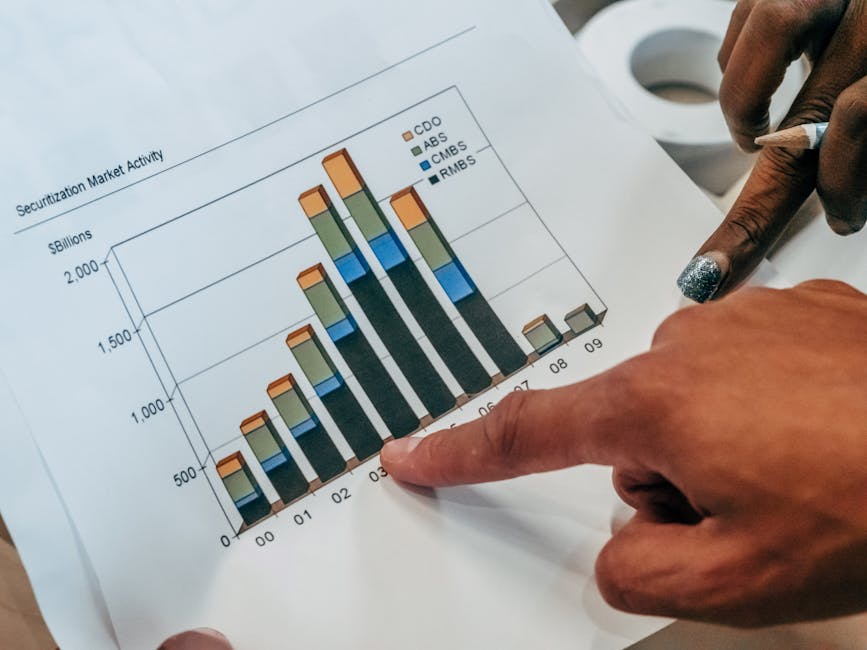
Photo by Kindel Media on Pexels
Once you know what to invest in, you need to decide how to pay for it. This involves choosing between debt (borrowing money from banks or bondholders) and equity (selling ownership shares to investors). Each has its pros and cons in terms of cost, risk, and control. A good capital structure balances these factors to minimize the cost of financing and maximize firm value.
c. Working Capital Management (Current Asset/Liability Management)

Photo by Tima Miroshnichenko on Pexels
This deals with the day-to-day financial operations of the company. It's about managing current assets (like cash, inventory, and accounts receivable) and current liabilities (like accounts payable and short-term loans) efficiently. Effective working capital management ensures a company has enough cash to pay its bills and operate smoothly without tying up too much money in unproductive assets.
Financial Markets

Photo by Markus Winkler on Pexels
Financial markets are the arenas where money is exchanged between those who have it (savers/investors) and those who need it (companies/borrowers/governments). They're crucial for corporate finance because they provide the mechanisms for companies to raise capital.
graph TD
    A["Company (Needs Capital)"] --> B["Primary Market (Issuance)"]
    B --> C["Investors (Have Capital)"]
    C --> D["Secondary Market (Trading)"]
    D --> C
    A --> E["Financial Institutions (Banks, Funds)"]
    E --> C
    E --> A
Types of Financial Markets:
- Primary Markets: This is where new securities (like stocks or bonds) are issued for the first time by a company to raise capital directly from investors. Think of an Initial Public Offering (IPO) where a company sells its shares to the public for the first time.
- Secondary Markets: Once securities have been issued in the primary market, they are traded among investors in the secondary market. Stock exchanges (like the NYSE or Nasdaq) are classic examples. Companies don't directly raise capital here, but the existence of a liquid secondary market makes investors more willing to buy in the primary market, as they know they can easily sell their investments later.
- Money Markets: Deal with short-term debt instruments (maturity less than one year), like Treasury bills and commercial paper. They help companies and governments manage their short-term cash needs.
- Capital Markets: Deal with long-term debt (bonds) and equity (stocks). These are used to finance long-term investments.
The ultimate goal of corporate finance is to maximize shareholder wealth. This means finding the best blend of investment, financing, and working capital decisions to increase the company's stock price over the long term.
3. Worked Example
Imagine you're the CFO of "Sunshine Solar," a fictional company that manufactures solar panels.
-
Capital Budgeting: Your engineers propose a new, highly efficient solar panel design that requires investing \$50 million in new manufacturing equipment. You analyze the projected sales, costs, and cash flows this new product would generate over the next 10 years. After careful calculations (using techniques like Net Present Value, which we'll cover later), you determine this project is highly profitable and should be pursued. This is an investment decision.
-
Capital Structure: Now that you've decided to invest \$50 million, you need to fund it. Your options are:
- Borrow \$50 million from a bank at a 6% interest rate (Debt).
- Issue new shares to raise \$50 million from investors (Equity).
You weigh the cost of debt, the impact on your existing shareholders, and the risk involved. You decide a balanced approach is best: borrow \$30 million via a corporate bond issue and raise the remaining \$20 million by issuing new shares to institutional investors. This is a financing decision.
-
Working Capital Management: As production starts for the new panels, you need to ensure you have enough raw materials (inventory), manage the time it takes for customers to pay you (accounts receivable), and pay your suppliers on time (accounts payable). For instance, you negotiate better payment terms with a key supplier, extending your payment period from 30 to 45 days. This frees up cash for other uses and ensures you don't run out of money for day-to-day operations. This is a working capital decision.
To execute the bond and share issuance, you work with investment banks in the primary market to sell your new securities to institutional investors and the public. Once issued, these bonds and shares will trade on the secondary market, allowing investors to buy and sell them freely. All these decisions are made with the ultimate goal of increasing the value of Sunshine Solar for its shareholders.
4. Key Takeaways
- Corporate finance focuses on three major decisions: investing, financing, and managing day-to-day operations.
- Capital budgeting is about choosing which long-term projects to invest in.
- Capital structure is about deciding how to pay for those investments (debt vs. equity).
- Working capital management ensures a company has enough cash for daily needs.
- Financial markets provide the platform for companies to raise capital and for investors to trade securities.
- The primary market is for new security issues, while the secondary market is for trading existing ones.
- The overarching goal of corporate finance is to maximize shareholder wealth.
Common Mistakes to Avoid
- Don't confuse the goal of maximizing profit with maximizing shareholder wealth; shareholder wealth considers timing and risk, not just immediate profit.
- Ignoring the trade-off between risk and return in investment and financing decisions.
- Underestimating the importance of liquidity – a profitable company can still fail if it runs out of cash.
- Thinking companies raise money directly from the secondary market; they raise it in the primary market.
- Not understanding the difference between debt and equity financing.
5. Now Try It
Think about a company you're familiar with (e.g., Apple, Tesla, or a local business). For that company, identify one recent real-world example for each of the three main corporate finance decisions: an investment decision they made, a financing decision (how they paid for something), and a working capital decision (how they manage their day-to-day cash). Then, identify at least one financial market they would have interacted with for their financing decision.
What success looks like: You can clearly articulate a plausible real-world example for each decision type and the relevant financial market, explaining why it fits that category.
Frequently asked about Introduction to Corporate Finance and Financial Markets
Study this next
Get the full Principles of corporate finance curriculum
Clone the complete plan to your dashboard for unlimited AI-generated notes, practice quizzes, and a personalised revision schedule.
Save this course free