Foundations of Biological Psychology
From the Biology psychology curriculum
TL;DR
Biological psychology explores how our biology, especially the brain, influences our thoughts, feelings, and behaviors. It combines psychology and biology to understand the physical basis of mental processes. You'll learn how different parts of your nervous system contribute to who you are.
1. The Mental Model
Think of your brain as the command center, operating your entire body and giving rise to your mind. Biological psychology zeroes in on how this command center's structure and activity directly create your experiences, memories, and personality. It's about bridging the gap between your physical body and your psychological self.
2. The Core Material
Biological psychology, also known as biopsychology or psychobiology, is an interdisciplinary field that examines the biological basis of behavior and mental processes. It's essentially the study of how your brain, nervous system, hormones, and genetics affect what you think, feel, and do. It's not just about what you do, but why you do it from a biological perspective.
The Nervous System: Your Internal Communication Network

Photo by Mikhail Nilov on Pexels
Your nervous system is crucial. It's divided into two main parts:
- Central Nervous System (CNS): This includes your brain and spinal cord. It's the processing unit, interpreting information and sending out commands.
- Peripheral Nervous System (PNS): This consists of all the nerves outside your brain and spinal cord. It connects the CNS to the rest of your body, including organs, muscles, and glands. The PNS is further divided into:
- Somatic Nervous System: Controls voluntary movements and transmits sensory information from your body to the CNS. Think of moving your hand or feeling a hot stove.
- Autonomic Nervous System: Regulates involuntary functions like breathing, heart rate, and digestion. You don't consciously control these. It has two branches:
- Sympathetic Nervous System: "Fight or flight" response—prepares your body for stress or action.
- Parasympathetic Nervous System: "Rest and digest" response—calms your body down after stress.
Neurons: The Basic Units
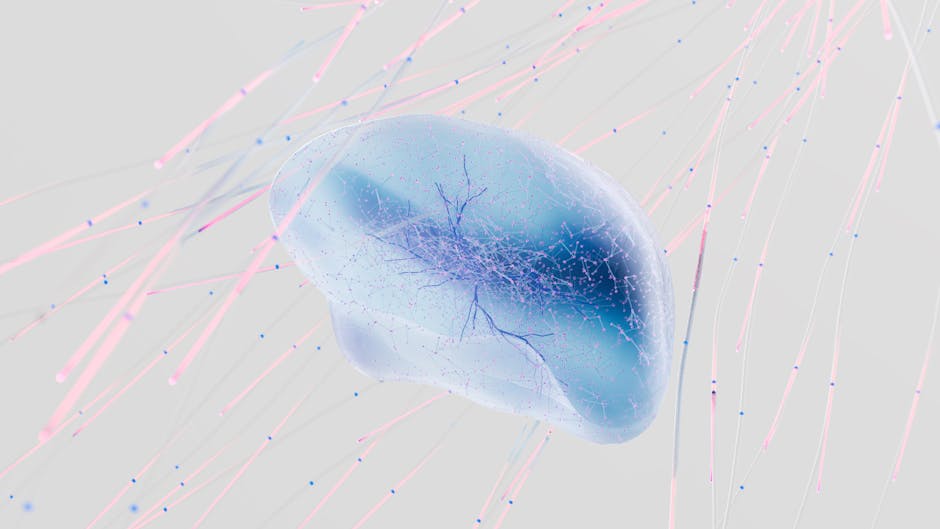
Photo by Google DeepMind on Pexels
The fundamental building blocks of your nervous system are neurons (nerve cells). These specialized cells transmit electrical and chemical signals. Each neuron has:
- Dendrites: Receive signals from other neurons.
- Cell Body (Soma): Processes the signals.
- Axon: Transmits signals away from the cell body to other neurons, muscles, or glands.
- Myelin Sheath: A fatty insulation around the axon that speeds up signal transmission.
- Synapse: The tiny gap where two neurons meet and communicate using neurotransmitters (chemical messengers).
graph TD
    A["Biological Psychology"] --> B["Focuses on"]
    B --> C["Brain"]
    B --> D["Nervous System"]
    B --> E["Hormones"]
    B --> F["Genetics"]
    C --> G["Influences"]
    D --> G
    E --> G
    F --> G
    G --> H["Behavior & Mental Processes"]
Neurotransmitters and Their Role

Photo by Mix and Match Studio on Pexels
Neurotransmitters are the chemical messengers that allow neurons to communicate across synapses. They play a huge role in everything from your mood and sleep to learning and motor control. Examples include:
- Dopamine: Involved in pleasure, reward, motivation, and motor control. Imbalances are linked to Parkinson's disease and schizophrenia.
- Serotonin: Influences mood, sleep, appetite, and well-being. Low levels are often associated with depression.
- Acetylcholine: Essential for muscle contraction and memory. Dysfunction is seen in Alzheimer's disease.
- GABA (Gamma-Aminobutyric Acid): The main inhibitory neurotransmitter, reducing neural excitability. Important for anxiety regulation.
- Glutamate: The main excitatory neurotransmitter, crucial for learning and memory.
Research Methods

Photo by Markus Winkler on Pexels
Biological psychologists use various methods to study the brain:
- Brain Imaging: Techniques like fMRI (functional Magnetic Resonance Imaging) and PET (Positron Emission Tomography) allow researchers to observe brain activity in living people.
- Lesion Studies: Examining the effects of brain damage (naturally occurring or experimentally induced in animals) on behavior.
- Electrophysiology: Recording electrical activity of the brain (e.g., EEG - Electroencephalography).
- Genetic Studies: Investigating the role of genes in behavior.
3. Worked Example
Let's consider how a common emotion, fear, is processed biologically.
Imagine you're walking home and suddenly hear a loud, unexpected bang.
- Sensory Input: Your ears (sensory organs) detect the sound. Auditory nerves in your PNS transmit this information to your CNS.
- Thalamus Relay: The signal first goes to the thalamus, often called the brain's "relay station."
- Amygdala Activation: The thalamus quickly sends a signal to your amygdala (part of the limbic system, crucial for emotion). The amygdala processes this as a potential threat.
- "Fight or Flight" Response: The amygdala triggers a cascade:
- It activates the hypothalamus, which then activates the sympathetic nervous system (part of your PNS).
- Neurotransmitters like norepinephrine and hormones like adrenaline (epinephrine) are released.
- Your heart rate speeds up, breathing quickens, muscles tense, and blood flows away from digestion to your limbs. This prepares you to react.
- Cortical Processing (Slower Path): Simultaneously, the thalamus sends the signal to the auditory cortex (in your temporal lobe in the CNS). Your cortex processes the sound more thoroughly, trying to identify its source.
- Contextual Appraisal: Your prefrontal cortex (in your frontal lobe) assesses the situation. If you realize the sound was just a car backfiring, your prefrontal cortex sends inhibitory signals to the amygdala.
- Parasympathetic Reversal: The amygdala's activity lessens, and your parasympathetic nervous system takes over, calming your body down. Your heart rate slows, and breathing returns to normal.
This example shows how both the CNS (brain structures like thalamus, amygdala, cortex) and PNS (sensory nerves, sympathetic/parasympathetic branches) work together, using neurotransmitters and hormones, to produce a complex psychological and physiological response like fear.
4. Key Takeaways
- Biological psychology examines the physical and biological processes underlying your thoughts and behaviors.
- Your nervous system, divided into the CNS (brain, spinal cord) and PNS (nerves outside CNS), is the primary communication network.
- Neurons are the basic cells that transmit signals using electrical impulses and chemical neurotransmitters.
- Neurotransmitters like dopamine, serotonin, and acetylcholine critically influence mood, memory, and motor control.
- Different brain regions are specialized for various functions, like the amygdala for fear or the prefrontal cortex for decision-making.
- Understanding biological processes like "fight or flight" helps explain your body's automatic responses to stress.
Common mistakes you should avoid:
* Simplifying reductionism: Don't think that complex behaviors are only due to a single brain area or neurotransmitter; they're usually interactions.
* Ignoring environmental factors: While biological, behavior is also influenced by experience and environment; it's a constant interaction.
* Confusing correlation with causation: Just because a brain area is active during a task doesn't mean it's the sole cause of that task.
* Forgetting plasticity: Your brain isn't fixed; it can change and adapt throughout your life, a concept called neuroplasticity.
5. Now Try It
For 15 minutes, research one specific mental disorder (e.g., depression, anxiety, Parkinson's disease). Your goal is to identify one neurotransmitter or brain structure that is commonly implicated in its development or symptoms. Explain, in your own words, how the dysfunction of that neurotransmitter or structure contributes to the disorder's characteristics. Success means you can clearly link a biological element to a specific psychological symptom.
Frequently asked about Foundations of Biological Psychology
Study this next
Get the full Biology psychology curriculum
Clone the complete plan to your dashboard for unlimited AI-generated notes, practice quizzes, and a personalised revision schedule.
Save this course free