Water Technology and Treatment
From the Engineering Chemistry curriculum
TL;DR
Water technology and treatment is crucial for making water safe for drinking, industrial uses, and responsible discharge. You'll learn about impurities in water, how to remove them using various physical and chemical methods, and key parameters for assessing water quality. Understanding these processes helps ensure sustainable water resources.
1. The Mental Model
Imagine water as a natural sponge, picking up everything it touches. Water treatment is like squeezing that sponge through various filters and reacting with specific chemicals to remove the unwanted bits, ensuring it's clean enough for its intended purpose.
2. The Core Material
Water is never 100% pure in nature; it always contains dissolved gases, minerals, suspended solids, and sometimes biological contaminants. These impurities can cause health problems, damage equipment, and impact industrial processes. Water treatment aims to remove or reduce these contaminants to an acceptable level.
Understanding Water Impurities
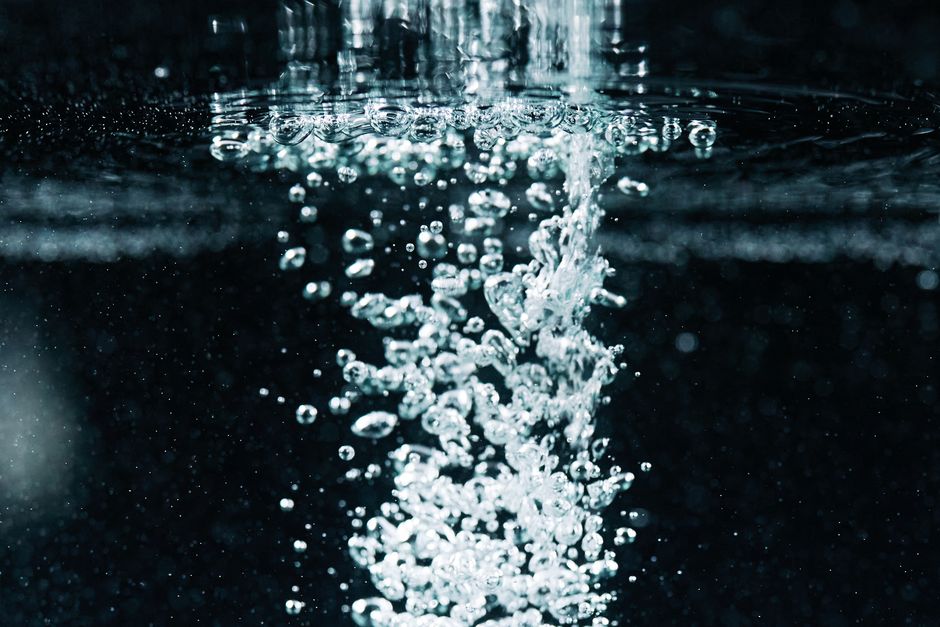
Photo by cottonbro studio on Pexels
Impurities are broadly classified into:
* Suspended Solids: Visible particles that don't dissolve, like silt, clay, and organic debris. They cause turbidity (cloudiness).
* Dissolved Solids: Ions (e.g., Ca²⁺, Mg²⁺, Na⁺, Cl⁻, SO₄²⁻, HCO₃⁻), gases (e.g., O₂, CO₂), and organic compounds that are dissolved in the water.
* Colloidal Solids: Extremely small particles (nanometers to micrometers) that remain suspended and don't settle easily, like some clays, silica, and organic matter. They contribute to turbidity and color.
* Microorganisms: Bacteria, viruses, protozoa, and algae that can cause diseases (pathogens).
Hardness of Water

Photo by Fino Tereno on Pexels
Water hardness is primarily caused by dissolved multivalent metal cations, mainly calcium (Ca²⁺) and magnesium (Mg²⁺) ions.
* Temporary Hardness: Caused by bicarbonates of calcium and magnesium. It can be removed by boiling, which precipitates calcium carbonate.
Ca(HCO₃)₂ (aq) → CaCO₃ (s)↓ + H₂O (l) + CO₂ (g)
* Permanent Hardness: Caused by sulfates and chlorides of calcium and magnesium. It cannot be removed by boiling and requires chemical treatment.
* Disadvantages of Hard Water:
* Scale formation: In boilers and pipes, reducing efficiency and blocking flow.
* Soap wastage: Hardness ions react with soap to form scum, instead of lathering.
* Poor laundry: Clothes look dull and feel stiff.
* Taste issues: Can affect the taste of beverages.
Water Treatment Processes
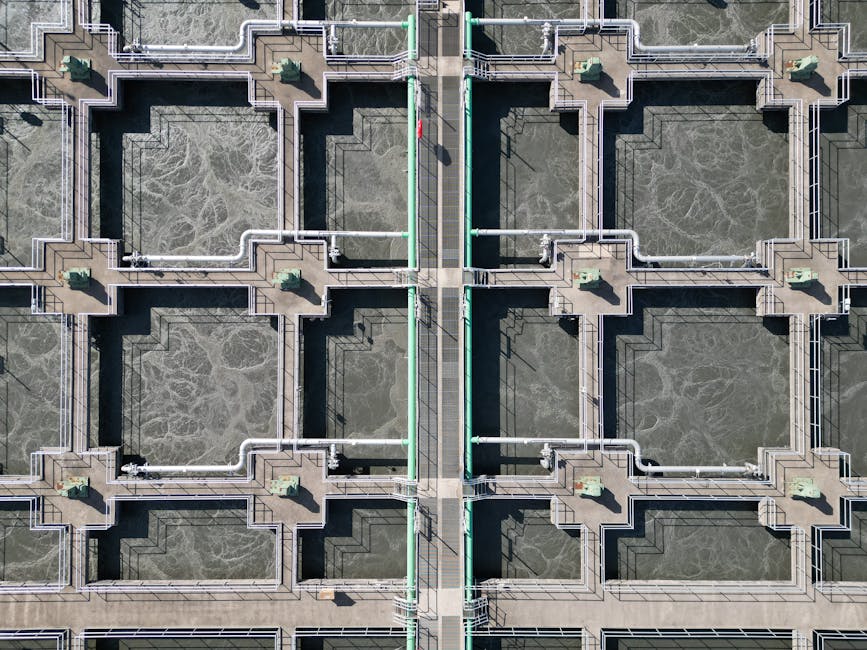
Photo by Giant Asparagus on Pexels
Here's a common sequence for municipal water treatment:
graph TD
    A["Raw Water Source (River, Lake)"] --> B["Screening (Removes large debris)"]
    B --> C["Coagulation/Flocculation (Adds chemicals to clump small particles)"]
    C --> D["Sedimentation (Allows flocs to settle)"]
    D --> E["Filtration (Removes remaining suspended solids)"]
    E --> F["Disinfection (Kills pathogens, e.g., chlorination)"]
    F --> G["Storage/Distribution"]
    G --> H["Consumers"]
### Coagulation and Flocculation
This step is used to remove very fine suspended particles and colloidal matter that don't settle easily.
1. Coagulation: A chemical coagulant (e.g., alum, ferric chloride) is added. These chemicals neutralize the negative surface charges on small particles, allowing them to clump together.
Al₂(SO₄)₃·18H₂O + 6HCO₃⁻ → 2Al(OH)₃ (s)↓ + 3SO₄²⁻ + 6CO₂ + 18H₂O
2. Flocculation: Gentle mixing causes these destabilized particles to collide and grow into larger, heavier aggregates called "flocs."
### Sedimentation
Flocs formed during flocculation are heavier than water and settle to the bottom of a tank, forming sludge, which is then removed.
### Filtration
Water passes through a layer of granular material (like sand, gravel, or anthracite). This physically removes remaining suspended particles and some microorganisms.
* Slow Sand Filters: Effective for removing bacteria, operate at low rates.
* Rapid Sand Filters: More common, require frequent backwashing to clean the filter media.
### Disinfection
This step kills pathogenic microorganisms (bacteria, viruses) in the water, making it safe to drink.
* Chlorination: Most common method. Chlorine (Cl₂), hypochlorite ( bleach), or chlorine dioxide are added. They oxidize microbial cells.
* Ozonation (O₃): A powerful oxidant, effective against a wide range of pathogens.
* UV Radiation: Non-chemical method; UV light damages microbial DNA, preventing reproduction.
Water Softening (Hardness Removal)

Photo by Tima Miroshnichenko on Pexels
This is a specific treatment for removing hardness ions.
### Lime-Soda Process
Adds lime (Ca(OH)₂) and soda ash (Na₂CO₃) to precipitate calcium and magnesium ions.
* Removes Temporary Hardness:
Ca(HCO₃)₂ + Ca(OH)₂ → 2CaCO₃ (s)↓ + 2H₂O
Mg(HCO₃)₂ + 2Ca(OH)₂ → Mg(OH)₂ (s)↓ + 2CaCO₃ (s)↓ + 2H₂O
* Removes Permanent Hardness:
CaSO₄ + Na₂CO₃ → CaCO₃ (s)↓ + Na₂SO₄
MgSO₄ + Ca(OH)₂ + Na₂CO₃ → Mg(OH)₂ (s)↓ + CaCO₃ (s)↓ + Na₂SO₄
### Ion Exchange (Zeolite Process / Demineralization)
Water passes through a bed of resin beads that contain mobile ions (e.g., Na⁺, H⁺). These resins exchange their mobile ions for hardness ions (Ca²⁺, Mg²⁺) in the water.
* Softening: 2NaR + Ca²⁺ → CaR₂ + 2Na⁺ (R represents the resin matrix)
* Demineralization: Uses two types of resins:
1. Cation Exchange Resin (H-form): Replaces cations (Ca²⁺, Mg²⁺, Na⁺) with H⁺.
Ca²⁺ + 2HR → CaR₂ + 2H⁺
2. Anion Exchange Resin (OH-form): Replaces anions (Cl⁻, SO₄²⁻, HCO₃⁻) with OH⁻.
Cl⁻ + ROH → RCl + OH⁻
The H⁺ and OH⁻ then combine to form pure water (H₂O).
Desalination
Processes to remove salt and other minerals from seawater or brackish water.
* Reverse Osmosis (RO): Water is forced under pressure through a semi-permeable membrane, leaving salts behind. It's highly energy-intensive.
* Distillation: Heating water to produce steam, then condensing it, leaving impurities behind. Also energy-intensive.
3. Worked Example
Let's calculate the amount of lime (90% pure Ca(OH)₂) and soda ash (95% pure Na₂CO₃) needed to soften 100,000 liters of hard water with the following impurities:
- Temporary Hardness (as CaCO₃): 162 mg/L (from Ca(HCO₃)₂)
- Permanent Hardness (as CaCO₃): 100 mg/L (from CaSO₄)
- Permanent Hardness (as CaCO₃): 84 mg/L (from MgCl₂) - note: Mg requires extra lime for precipitation as Mg(OH)₂
Molecular Weights:
CaCO₃ = 100 g/mol
Ca(HCO₃)₂ = 162 g/mol
Ca(OH)₂ = 74 g/mol
Na₂CO₃ = 106 g/mol
CaSO₄ = 136 g/mol
MgCl₂ = 95 g/mol
Step 1: Convert all hardness to CaCO₃ equivalents (if not already given as such).
* Temporary Hardness (due to Ca(HCO₃)₂): Given as 162 mg/L CaCO₃. This means 162 mg/L Ca(HCO₃)₂ is present, which is 162 mg/L CaCO₃ equivalent (since their MWs are both 162 and 100, and 162 * (100/162) = 100 mg/L). Let's work with the raw concentrations: 162 mg/L Ca(HCO₃)₂.
* To remove Ca(HCO₃)₂ requires Ca(OH)₂: Ca(HCO₃)₂ + Ca(OH)₂ → 2CaCO₃ + 2H₂O
* Equivalents: (162 g Ca(HCO₃)₂ / 162 g/mol Ca(HCO₃)₂) * (1 mol Ca(OH)₂ / 1 mol Ca(HCO₃)₂) * 74 g/mol Ca(OH)₂ = 74 g Ca(OH)₂ per 162 g Ca(HCO₃)₂.
* So, for 162 mg/L Ca(HCO₃)₂, you need 74 mg/L Ca(OH)₂.
* Permanent Hardness (due to CaSO₄): Given as 100 mg/L CaCO₃ equivalent. This means 100 mg/L CaSO₄.
* To remove CaSO₄ requires Na₂CO₃: CaSO₄ + Na₂CO₃ → CaCO₃ + Na₂SO₄
* Equivalents: (100 g CaSO₄ / 136 g/mol CaSO₄) * (1 mol Na₂CO₃ / 1 mol CaSO₄) * 106 g/mol Na₂CO₃ = 77.9 g Na₂CO₃ per 100 g CaSO₄ (this is wrong, the calculation should be based on CaCO3 equivalent for easier use, so 100 mg/L CaCO₃ equivalent CaSO₄ means 100 mg/L Na₂CO₃ is needed).
* So, for 100 mg/L CaCO₃ equivalent CaSO₄, you need 100 mg/L Na₂CO₃.
* Permanent Hardness (due to MgCl₂): Given as 84 mg/L CaCO₃ equivalent. This means 84 mg/L MgCl₂.
* To remove MgCl₂
Frequently asked about Water Technology and Treatment
Study this next
Get the full Engineering Chemistry curriculum
Clone the complete plan to your dashboard for unlimited AI-generated notes, practice quizzes, and a personalised revision schedule.
Save this course free