Introduction to Chemical Reactions
From the bioo curriculum
TL;DR
Chemical reactions are processes where atoms rearrange to form new substances. Reactants are the starting materials, and products are what you end up with. We represent these changes using chemical equations to show what's happening.
1. The Mental Model
Think of chemical reactions like building with LEGOs. You start with certain blocks (reactants), break them apart, and then connect them in new ways to build something completely different (products). The individual LEGO bricks (atoms) themselves don't change, just how they're connected.
2. The Core Material
Chemical reactions are fundamental to everything from cooking to how your body works. They're essentially processes where one or more substances, called reactants, are transformed into different substances, called products. This transformation involves breaking existing chemical bonds and forming new ones.
What Happens in a Reaction?
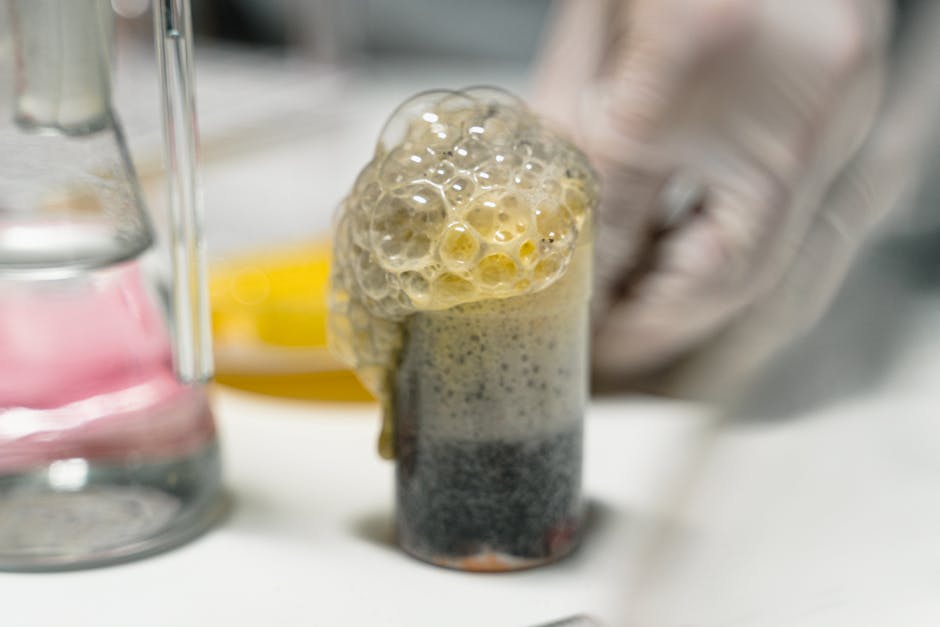
Photo by MART PRODUCTION on Pexels
When a chemical reaction occurs, you're not creating or destroying atoms, just rearranging them. This is a core principle in chemistry: the Law of Conservation of Mass. It means that the total mass of the reactants must equal the total mass of the products. You simply can't lose or gain atoms in the process.
Let's look at a common example: burning methane gas.
Methane (CH₄) + Oxygen (O₂) → Carbon Dioxide (CO₂) + Water (H₂O)
In this reaction:
* Reactants: Methane (CH₄) and Oxygen (O₂)
* Products: Carbon Dioxide (CO₂) and Water (H₂O)
The carbon atoms, hydrogen atoms, and oxygen atoms present at the start are all present at the end, just bonded together differently.
Evidence of a Chemical Reaction
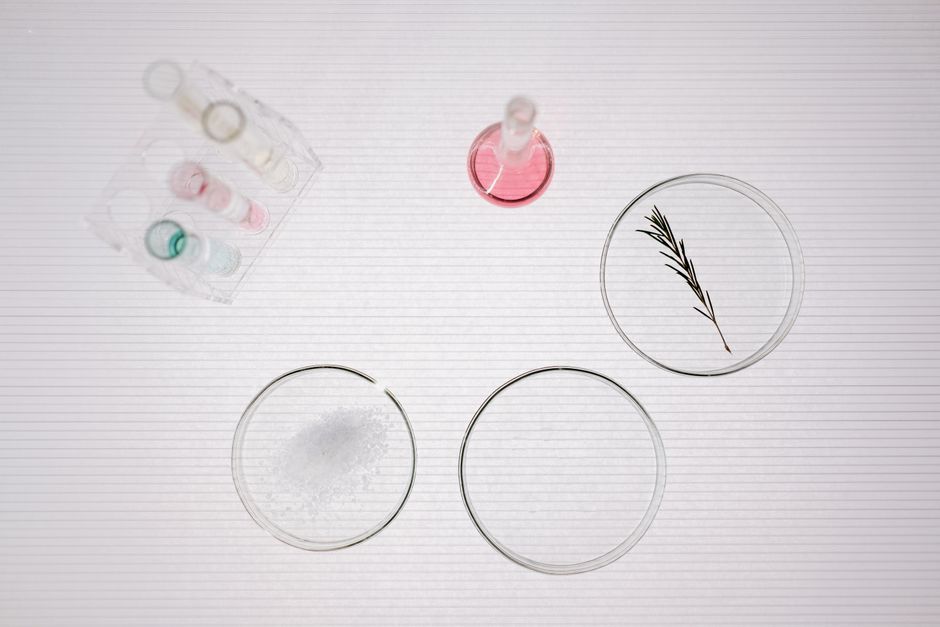
Photo by Ron Lach on Pexels
How can you tell if a chemical reaction has occurred? You won't always see huge explosions, but there are several common indicators:
- Change in Temperature: The reaction might release heat (exothermic) or absorb heat (endothermic), making the surroundings warmer or colder.
- Formation of a Gas: Bubbles appearing in a liquid, or a noticeable smell, can indicate gas formation.
- Formation of a Precipitate: If two clear solutions mix and suddenly become cloudy or form a solid that settles out, that's a precipitate.
- Change in Color: A distinct color change often signifies a new substance has formed.
- Production of Light/Sound: Some reactions release energy in these forms.
Here's a simple flow of how to identify if a change is chemical:
graph TD
    A["Observe a change"] --> B{"Is it easy to reverse?"};
    B -- "No" --> C{"Are new substances formed?"};
    B -- "Yes" --> D["Physical Change"];
    C -- "Yes" --> E["Chemical Change"];
    C -- "No / Not sure" --> F{"Look for common indicators (temp, gas, ppt, color, light)"};
    F --> E;
    F --> D;
Chemical Equations

Photo by Vitaly Gariev on Pexels
We use chemical equations to represent reactions succinctly. These equations show the chemical formulas for reactants on the left, an arrow indicating the direction of the reaction, and the chemical formulas for products on the right.
For the methane example:
CH₄ + O₂ → CO₂ + H₂O
This equation, however, isn't balanced. It doesn't show the same number of each type of atom on both sides, which violates the Law of Conservation of Mass. Balancing equations is a critical skill we'll cover soon, but for now, just know that the numbers in front of the chemical formulas (called coefficients) are used to balance them.
A balanced version of the methane reaction looks like this:
CH₄ + **2**O₂ → CO₂ + **2**H₂O
Now, let's count the atoms:
| Atom Type | Left Side (Reactants) | Right Side (Products) |
|---|---|---|
| Carbon (C) | 1 | 1 |
| Hydrogen (H) | 4 | 2 * 2 = 4 |
| Oxygen (O) | 2 * 2 = 4 | 2 + 2 * 1 = 4 |
See? All balanced! The coefficients (the '2' in front of O₂ and H₂O) tell us how many molecules of that substance are involved.
3. Worked Example
Let's consider the reaction of baking soda (sodium bicarbonate) with vinegar (acetic acid).
Reactants: Sodium Bicarbonate (NaHCO₃) and Acetic Acid (CH₃COOH)
Products: Sodium Acetate (CH₃COONa), Water (H₂O), and Carbon Dioxide (CO₂)
First, write out the unbalanced word equation:
Sodium Bicarbonate + Acetic Acid → Sodium Acetate + Water + Carbon Dioxide
Now, convert it to an unbalanced chemical equation using their formulas:
NaHCO₃ + CH₃COOH → CH₃COONa + H₂O + CO₂
Let's check the atom count for each element on both sides:
| Atom Type | Left Side (Reactants) | Right Side (Products) |
|---|---|---|
| Sodium (Na) | 1 | 1 |
| Hydrogen (H) | 1 + 3 + 1 = 5 | 3 + 2 = 5 |
| Carbon (C) | 1 + 2 = 3 | 2 + 1 = 3 |
| Oxygen (O) | 3 + 2 = 5 | 2 + 1 + 2 = 5 |
In this case, the equation is already balanced as written! This means one molecule of sodium bicarbonate reacts with one molecule of acetic acid to produce one molecule of sodium acetate, one molecule of water, and one molecule of carbon dioxide. The obvious evidence you'd see for this reaction is the bubbling (formation of CO₂ gas).
4. Key Takeaways
- Chemical reactions involve the rearrangement of atoms to form new substances.
- Reactants are your starting materials; products are your ending materials.
- The Law of Conservation of Mass dictates that atoms are never lost or gained in a reaction, only rearranged.
- You can often spot a chemical reaction by observing changes like temperature, color, gas formation, or precipitate formation.
- Chemical equations use formulas and coefficients to represent reactions and must be balanced.
Common Mistakes to Avoid:
- Don't confuse physical changes (like melting ice) with chemical reactions where new substances are formed.
- Never try to change the chemical formula of a substance to balance an equation; only adjust the coefficients.
- Forgetting that the arrow in a chemical equation means "produces" or "yields," not "equals."
- Assuming all reactions are explosive or dramatically noticeable; many subtle reactions happen constantly.
5. Now Try It
Find two common household items that you suspect undergo a chemical reaction when mixed (e.g., baking soda and lemon juice, hydrogen peroxide and yeast, or milk and vinegar). Without actually mixing them, try to identify the reactants and predict what observable changes you'd expect to see if a reaction occurs. Write down the chemical formulas for the reactants and try to guess what the products might be. What would success look like? You'd have correctly identified the inputs, likely outputs, and at least one observable indicator of a chemical reaction.
Frequently asked about Introduction to Chemical Reactions
Study this next
Get the full bioo curriculum
Clone the complete plan to your dashboard for unlimited AI-generated notes, practice quizzes, and a personalised revision schedule.
Create Free Account