Introduction to Cell Biology
From the Cell the building block of life class 9 new nxert curriculum
Introduction to Cell Biology
TL;DR
Cells are the basic building blocks of all living things, from tiny bacteria to giant trees and us. They're like minuscule, self-contained units that carry out all life's essential functions. Understanding cells helps you grasp how living organisms work and how life got started.
1. The Mental Model
Imagine a LEGO brick. Just as many LEGO bricks build a house, many cells build an organism. Each cell is a tiny "mini-factory" with specific jobs, and when grouped, they create tissues, organs, and ultimately a whole living being.
2. The Core Material
You might wonder, "What exactly is a cell?" Well, it's the smallest unit of life that can function independently. Think of it as the fundamental unit that shows all characteristics of life: growth, reproduction, response to stimuli, and metabolism.
Cells are incredibly diverse, but they share some common features. All cells have an outer boundary called the plasma membrane (or cell membrane), which controls what goes in and out, much like a security guard. Inside this membrane, you'll find a jelly-like substance called cytoplasm, where most of the cell's activities happen. Within the cytoplasm are various tiny structures called organelles, each with its own special job.
One of the biggest distinctions in cells is whether they have a true nucleus. Based on this, cells are broadly categorized into two types:
Prokaryotic Cells
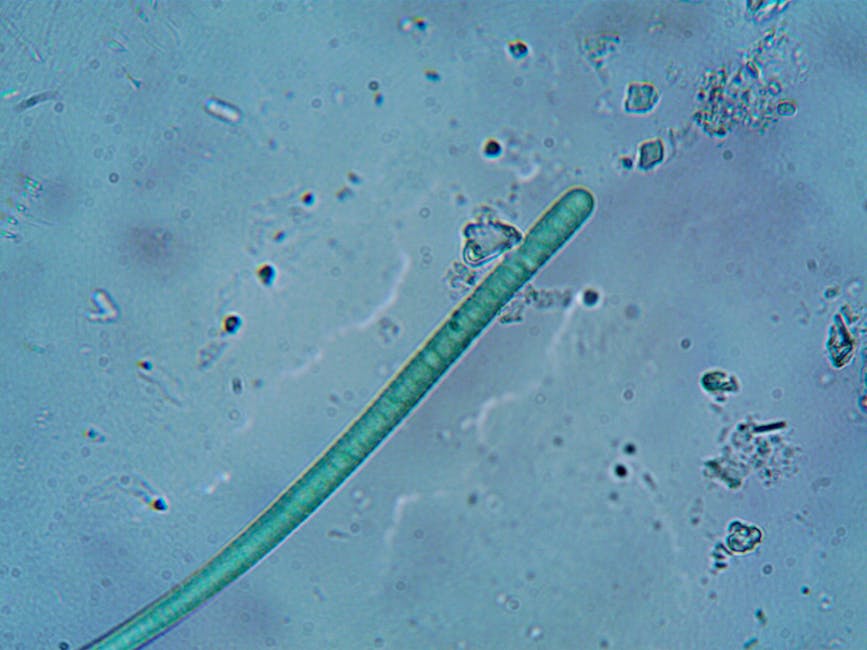
Photo by turek on Pexels
These are the simpler, older type of cells. They don't have a true nucleus, meaning their genetic material (DNA) floats freely in the cytoplasm in a region called the nucleoid. They also lack many of the membrane-bound organelles found in more complex cells. Bacteria and archaea are examples of prokaryotic organisms. They're usually much smaller than eukaryotic cells.
Eukaryotic Cells
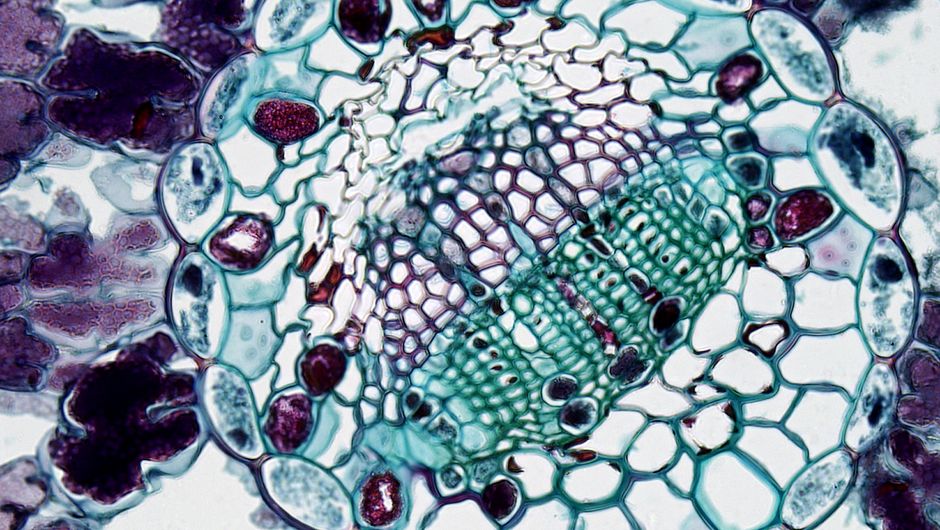
Photo by Fayette Reynolds M.S. on Pexels
These are more complex and evolved cells. They do have a well-defined nucleus that houses their genetic material, protected by a nuclear membrane. Eukaryotic cells also contain many specialized, membrane-bound organelles like mitochondria (the cell's powerhouses), endoplasmic reticulum, Golgi apparatus, and in plant cells, chloroplasts (for photosynthesis). Animals, plants, fungi, and protists are all made of eukaryotic cells.
Here's a simple way to visualize the difference:
graph TD
    A["Cell Types"] --> B("Prokaryotic Cells")
    A --> C("Eukaryotic Cells")

    B --> B1("No True Nucleus")
    B --> B2("DNA floats freely (nucleoid)")
    B --> B3("No membrane-bound organelles")
    B --> B4("Examples: Bacteria, Archaea")

    C --> C1("True Nucleus (contains DNA)")
    C --> C2("Has membrane-bound organelles")
    C --> C3("Examples: Animals, Plants, Fungi, Protists")
The discovery of cells traces back to the 17th century when Robert Hooke first observed cork under a microscope and saw tiny box-like compartments he called "cells" (because they reminded him of monastic cells). Later, Anton van Leeuwenhoek observed living single-celled organisms, which he called "animalcules." These early observations laid the foundation for Cell Theory, a fundamental principle of biology. Its key points are:
- All organisms are composed of one or more cells.
- The cell is the basic structural and functional unit of life.
- All cells arise from pre-existing cells.
This theory states that life doesn't spontaneously generate but comes from existing life, at the cellular level. This concept is incredibly important for understanding reproduction and heredity.
3. Worked Example
Let's say you're looking at a magnified image of a single-celled organism. You observe that it has a cell membrane, cytoplasm, and some genetic material, but there's no distinct, membrane-enclosed structure holding the genetic material, and you don't see any mitochondria or chloroplasts.
Based on this observation, you can confidently classify this organism as prokaryotic. If you instead saw a clear, spherical structure containing genetic material (a nucleus) and several other distinct, membrane-bound sacs within the cytoplasm, you'd know it's a eukaryotic cell. The presence or absence of a true nucleus is your primary distinguishing feature here.
4. Key Takeaways
- Every living organism is made of one or more cells, the fundamental unit of life.
- Cells come in two main types: prokaryotic (no true nucleus) and eukaryotic (with a true nucleus).
- The plasma membrane controls what enters and exits the cell, while cytoplasm is the jelly-like substance where cell activities happen.
- Organelles are tiny structures within cells, each with specific functions.
- Cell theory states that all cells come from pre-existing cells, form the basic unit of life, and all organisms are made of cells.
Common mistakes to avoid:

Photo by KATRIN BOLOVTSOVA on Pexels
- Don't confuse the cell wall (found in plants, fungi, some prokaryotes) with the plasma membrane (found in all cells). The plasma membrane is always present inside the cell wall, if one exists.
- Don't think that prokaryotic cells are "lesser" — they're incredibly successful and diverse, like bacteria.
- Remember that DNA is present in both prokaryotic and eukaryotic cells; it's just organized differently.
- Don't forget that bacteria are a type of prokaryote; many students mistakenly think bacteria are eukaryotic because they are living organisms.
5. Now Try It
Imagine you discover a new, microscopic organism. You examine it closely under a powerful microscope and note the following: It has an outer boundary, a jelly-like interior, and genetic material. Crucially, you observe that its genetic material is enclosed within a distinct, membrane-bound sac, and you also identify several oval-shaped structures (which are mitochondria) in its cytoplasm. Based on these observations, describe whether this organism is likely prokaryotic or eukaryotic, and explain why using at least two specific features mentioned above.
Success looks like correctly identifying the cell type and clearly listing the two observational reasons that support your classification.
Frequently asked about Introduction to Cell Biology
Study this next
Get the full Cell the building block of life class 9 new nxert curriculum
Clone the complete plan to your dashboard for unlimited AI-generated notes, practice quizzes, and a personalised revision schedule.
Create Free Account