Introduction to Photosynthesis
From the Photosynthesis for exam revision curriculum
Introduction to Photosynthesis
TL;DR
Photosynthesis converts light energy into chemical energy, producing glucose and oxygen from carbon dioxide and water. It happens in two main stages: light-dependent reactions capture energy, then light-independent reactions build glucose. This process powers nearly all life on Earth by creating food and oxygen.
1. The Mental Model
Think of photosynthesis as nature's solar panel system. Plants capture sunlight and use it to manufacture their own food from simple ingredients in the air and soil. The whole process is like a two-stage factory: first, capture and convert the energy, then use that energy to build something useful.
2. The Core Material
The Overall Equation

Photo by Bernice Chan on Pexels
You need to know this equation inside out:
6CO₂ + 6H₂O + light energy → C₆H₁₂O₆ + 6O₂
But here's what examiners really want you to understand: this simple equation hides a complex two-stage process. The water doesn't directly combine with CO₂ to make glucose. Instead, water gets split in stage one to provide electrons and protons, while CO₂ gets fixed into glucose in stage two.
Where It Happens: Chloroplast Structure
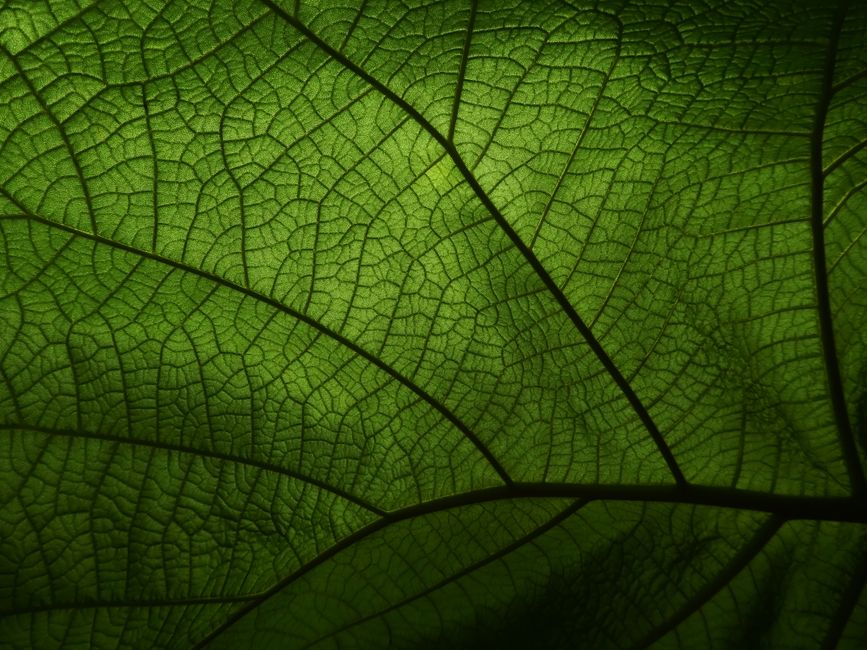
Photo by ClickerHappy on Pexels
Photosynthesis occurs in chloroplasts, which have a specific structure you must know:
- Thylakoids: Flattened sacs where light-dependent reactions occur
- Grana: Stacks of thylakoids (like stacked coins)
- Stroma: The fluid-filled space around thylakoids where light-independent reactions happen
- Chlorophyll: The green pigment that captures light energy, mainly in photosystems I and II
The spatial separation is crucial. Light reactions happen ON the thylakoid membranes, while the Calvin cycle happens IN the stroma. This isn't random—it allows the plant to build up a proton gradient across the membrane.
graph TD
    A["Sunlight"] --> B["Chloroplast"]
    B --> C["Thylakoids (Light-dependent reactions)"]
    B --> D["Stroma (Light-independent reactions)"]
    C --> E["ATP + NADPH produced"]
    C --> F["O₂ released"]
    C --> G["H₂O split"]
    E --> D
    H["CO₂ enters"] --> D
    D --> I["Glucose produced"]
Stage 1: Light-Dependent Reactions (The Photo Part)

Photo by Ron Lach on Pexels
This stage captures light energy and converts it into chemical energy. Here's what actually happens:
Photolysis: Water molecules get split (H₂O → 2H⁺ + ½O₂ + 2e⁻). The oxygen is released as a waste product—yes, the oxygen you breathe is just plant waste! The electrons replace those lost by chlorophyll when it absorbs light.
Energy conversion: Light energy excites electrons in chlorophyll molecules. These high-energy electrons get passed along an electron transport chain, and as they lose energy, that energy pumps protons across the thylakoid membrane.
ATP and NADPH production: The proton gradient drives ATP synthase (like a molecular turbine), creating ATP. Meanwhile, electrons end up in NADPH. Both ATP and NADPH are energy carriers that power stage two.
The key insight: this stage doesn't make glucose at all. It just converts light energy into the chemical energy currencies (ATP and NADPH) that stage two needs.
Stage 2: Light-Independent Reactions/Calvin Cycle (The Synthesis Part)

Photo by cottonbro studio on Pexels
This stage uses the ATP and NADPH from stage one to build glucose from CO₂. It's called "light-independent" because it doesn't directly need light—but it absolutely needs the products of the light-dependent reactions.
Carbon fixation: CO₂ from the atmosphere gets attached to a 5-carbon compound called RuBP by the enzyme RuBisCO. This creates unstable 6-carbon compounds that immediately split into two 3-carbon molecules.
Reduction: The 3-carbon molecules get modified using energy from ATP and electrons from NADPH. Some of these modified molecules leave the cycle to eventually become glucose.
Regeneration: The remaining molecules get rearranged and combined (using more ATP) to recreate RuBP, so the cycle can continue.
Critical point: It takes six turns of this cycle to make one glucose molecule. That's why the overall equation has "6CO₂"—each CO₂ requires one cycle.
Why Both Stages Matter
You can't have photosynthesis without both stages working together. Stage one creates the energy currencies; stage two spends them. If you block stage one (like putting a plant in darkness), stage two stops within minutes because it runs out of ATP and NADPH. If you block stage two (like removing CO₂), stage one soon stops because it runs out of electron acceptors.
3. Worked Example
Let's trace what happens when a leaf photosynthesizes for exactly one hour on a sunny day.
Starting conditions: Bright sunlight hitting a leaf, atmospheric CO₂ at 0.04%, adequate water supply.
Stage 1 events (in thylakoids):
- Chlorophyll absorbs photons and releases high-energy electrons
- Water molecules split: 12H₂O → 24H⁺ + 6O₂ + 24e⁻
- Electron transport chain uses electron energy to pump protons across membrane
- ATP synthase produces ATP using proton gradient
- NADP⁺ accepts electrons and protons to become NADPH
- Products: ATP, NADPH, and 6O₂ (released to atmosphere)
Stage 2 events (in stroma):
- RuBisCO enzyme fixes 6CO₂ molecules by attaching them to RuBP
- 6 unstable 6-carbon compounds immediately split into 12 three-carbon molecules
- ATP and NADPH from stage 1 provide energy to convert these into higher-energy forms
- 2 of these molecules leave the cycle and combine to form glucose (C₆H₁₂O₆)
- Remaining 10 molecules use more ATP to regenerate 6 RuBP molecules
- Net result: 1 glucose molecule produced
Energy accounting: The leaf captured light energy and stored it in glucose bonds. The glucose contains about 686 kJ/mol of chemical energy that the plant can later release through respiration when it needs energy for growth, maintenance, or reproduction.
Observable outcomes: If you measured this leaf, you'd detect oxygen being released, CO₂ being absorbed, and if you could analyze the leaf tissue, you'd find increased glucose/starch content.
4. Examiner's Breakdown
4.1 What Examiners Actually Reward
- "Photosynthesis occurs in two distinct stages: light-dependent reactions in the thylakoids and light-independent reactions in the stroma."
- "Water is split during the light-dependent reactions to replace electrons lost by chlorophyll, producing oxygen as a waste product."
- "ATP and NADPH produced in stage one provide the energy and reducing power for stage two."
- "The Calvin cycle fixes CO₂ using RuBisCO enzyme and requires six turns to produce one glucose molecule."
- "Light-independent reactions can occur in darkness but only while ATP and NADPH supplies last from the light-dependent reactions."
- "The spatial separation of reactions allows establishment of a proton gradient across thylakoid membranes."
4.2 Trapdoor Mistakes
MISTAKE: "Plants use CO₂ and water directly to make glucose using sunlight." → FIX: "Light reactions split water and create energy carriers; separate Calvin cycle reactions use those carriers to fix CO₂ into glucose."
MISTAKE: "Oxygen is produced when CO₂ and water combine." → FIX: "Oxygen comes specifically from splitting water molecules during light-dependent reactions, not from CO₂."
MISTAKE: "Light-independent reactions don't need any products from light-dependent reactions." → FIX: "Light-independent reactions absolutely require ATP and NADPH from light-dependent reactions to function."
MISTAKE: "Chlorophyll directly converts light into glucose." → FIX: "Chlorophyll converts light into chemical energy (ATP/NADPH), which then powers glucose synthesis in a separate process."
4.3 Score-Boosting Comparisons
| Concept | Light-Dependent Reactions | Light-Independent Reactions | Key Difference |
|---|---|---|---|
| Location | Thylakoid membranes | Stroma | Physical separation allows specialization |
| Direct light requirement | Essential | None | Only stage 1 directly uses photons |
| Main inputs | H₂O, light, ADP, NADP⁺ | CO₂, ATP, NADPH | Different raw materials for different jobs |
| Main outputs | O₂, ATP, NADPH | Glucose, ADP, NADP⁺ | Stage 1 makes energy carriers; stage 2 uses them |
| Key enzyme | ATP synthase | RuBisCO | Different enzymes for energy vs. carbon fixation |
5. Now Try It
Write a complete answer to this exam question: "Explain why both stages of photosynthesis are essential and describe what would happen if stage 1 was blocked while stage 2 continued to receive CO₂."
Your answer must include: the specific products of stage 1 that stage 2 requires, why these products can't be substituted, what happens to glucose production when ATP/NADPH run out, and why this shows the stages are interdependent rather than independent processes.
Success looks like: A 200-word answer that clearly explains the biochemical dependency between stages and predicts the specific consequences of blocking stage 1.
Frequently asked about Introduction to Photosynthesis
Study this next
Get the full Photosynthesis for exam revision curriculum
Clone the complete plan to your dashboard for unlimited AI-generated notes, practice quizzes, and a personalised revision schedule.
Create Free Account