The Importance of Water
From the Biology curriculum
The Importance of Water
TL;DR
Water is essential for all known life forms, acting as a universal solvent and participating in critical biological processes. Its unique properties, like cohesion and high heat capacity, make it perfect for supporting living organisms. Without water, life as we know it simply couldn't exist.
1. The Mental Model
Think of water as life's "do-it-all" molecule. It's not just something you drink; it's the medium that allows chemicals to react, transports vital substances, and helps regulate temperature within living things.
2. The Core Material
You've probably heard that water is crucial for life, and it’s true! About 70% of your body is water, and for good reason. Water (H₂O) has some really special properties that make it uniquely suited to support life.
First, water is a polar molecule. This means it has a slight positive charge on its hydrogen atoms and a slight negative charge on its oxygen atom. These opposite charges attract each other, forming hydrogen bonds between water molecules.
2.1 Unique Properties of Water
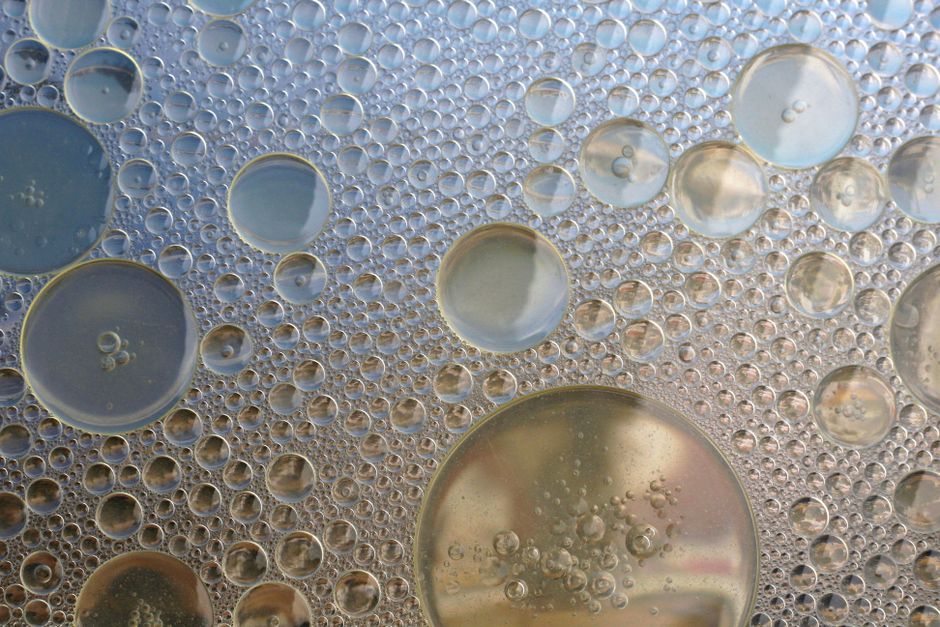
Photo by Landiva Weber on Pexels
- Solvent Capabilities: Because it's polar, water is an excellent solvent, often called the "universal solvent." It can dissolve many other polar substances (like salts, sugars, and many proteins), allowing them to be transported throughout an organism or to react with each other. Imagine trying to mix sugar into oil – it won't work well! Water does this job easily for most biological molecules.
- Cohesion and Adhesion: Water molecules stick to each other (this is cohesion) because of hydrogen bonds. They also stick to other polar surfaces (this is adhesion). This is super important for plants, allowing water to move up from the roots to the leaves against gravity.
- High Heat Capacity: Water can absorb a lot of heat energy before its temperature significantly increases. This high specific heat helps organisms maintain a stable internal temperature, protecting them from drastic changes in external temperature. It also means large bodies of water (like oceans) help moderate global climates.
- High Heat of Vaporization: A lot of energy is needed to turn liquid water into a gas (steam). This allows organisms to cool down efficiently through evaporation (like sweating).
- Lower Density as a Solid: Unlike most substances, water becomes less dense when it freezes, meaning ice floats. This is crucial for aquatic life, as it allows lakes and oceans to freeze from the top down, insulating the water below and preventing them from freezing solid.
Here's a simple flow of how water's properties lead to its biological functions:
graph TD
    A["Water is (H₂O)"] --> B["Polar Molecule"];
    B --> C["Forms Hydrogen Bonds"];
    C --> D1["Cohesion"];
    C --> D2["Adhesion"];
    C --> D3["High Heat Capacity"];
    C --> D4["High Heat of Vaporization"];
    C --> D5["Solvent Capabilities"];
    C --> D6["Lower Density as a Solid"];

    D1 & D2 --> E1["Allows Capillary Action (e.g., in plants)"];
    D3 --> E2["Regulates Temperature (internal & environmental)"];
    D4 --> E3["Cools Organisms (e.g., sweating)"];
    D5 --> E4["Transports Nutrients & Waste, Enables Reactions"];
    D6 --> E5["Insulates Aquatic Life (ice floats)"];
2.2 Water in Biological Processes

Photo by Sofía Falco on Pexels
Beyond its physical properties, water is directly involved in many chemical reactions:
- Hydrolysis: Water is used to break down large molecules (like proteins, carbohydrates, and fats) into smaller ones. Enzymes often facilitate this "water-breaking" reaction.
- Dehydration Synthesis: This is the opposite of hydrolysis. Water is removed to join smaller molecules together, building larger ones.
- Photosynthesis: Plants use water, carbon dioxide, and sunlight to create glucose (sugar) and oxygen. Water is a reactant here!
3. Worked Example
Let's consider how a plant uses water for survival, showing multiple properties in action. Imagine a tall tree on a sunny day.
1. Water absorption: Roots take in water from the soil. The water travels up the xylem (plant's "pipes") to the leaves. This upward movement, called capillary action, is possible due to water's cohesion (water molecules sticking together) and adhesion (water sticking to the xylem walls).
2. Photosynthesis: In the leaves, water is a key ingredient in photosynthesis, turning sunlight into energy for the plant.
3. Temperature regulation: As the sun heats the leaves, water evaporates from tiny pores (stomata) on the leaf surface, a process called transpiration. This evaporative cooling, thanks to water's high heat of vaporization, prevents the leaves from overheating and getting damaged.
4. Nutrient transport: Water within the tree also acts as a solvent, carrying dissolved minerals from the roots to the leaves and sugars (produced during photosynthesis) from the leaves to other parts of the plant.
Without water and its special properties, this tree couldn't transport nutrients, create food, or regulate its temperature, ultimately leading to its demise.
4. Key Takeaways
- Water's polarity allows it to form hydrogen bonds, leading to its unique properties.
- It's an excellent solvent, crucial for transporting substances and enabling chemical reactions.
- Water's high specific heat helps living organisms and environments maintain stable temperatures.
- Cohesion and adhesion are vital for water transport in plants and other biological systems.
- Ice floating is a critical property that insulates aquatic environments, protecting life below.
- Water actively participates in essential metabolic reactions like hydrolysis and photosynthesis.
Common Mistakes to Avoid:
* Don't confuse "polar" with "charged" – water has partial charges, but is overall neutral.
* Don't forget that water is a reactant in some key biological processes, not just a bystander.
* Avoid thinking of water's properties in isolation; they often work together (e.g., cohesion and adhesion for capillary action).
* Don't underestimate the impact of water's lower density as a solid on Earth's ecosystems.
5. Now Try It
Think about how desert animals (like a camel) and marine animals (like a fish) use water differently or how their bodies are adapted to water availability. For each animal, describe two specific ways water's properties are essential for their survival in their unique environment.
Success looks like: You've identified at least two distinct adaptations/uses of water for each animal, linking them back to specific properties of water discussed above (e.g., high heat capacity, solvent capabilities, participation in reactions).
Frequently asked about The Importance of Water
Study this next
Get the full Biology curriculum
Clone the complete plan to your dashboard for unlimited AI-generated notes, practice quizzes, and a personalised revision schedule.
Create Free Account