Introduction to Physics: Role, Branches, and Foundational Concepts
From the physics curriculum
Introduction to Physics: Role, Branches, and Foundational Concepts
TL;DR
Physics is about understanding how everything in the universe works, from tiny particles to giant galaxies. It's built on observation and math, and it underpins almost all other sciences and technologies. We'll explore its main areas and the big ideas that tie them together.
1. The Mental Model
Imagine physics like a giant instruction manual for the universe. It tries to figure out the rules, forces, and principles that make everything happen, whether it's an apple falling or a star shining. You're learning to read and understand this manual.
2. The Core Material
Physics is the natural science that studies matter, its fundamental constituents, its motion and behavior through space and time, and the related entities of energy and force. It's often called the fundamental science because its principles form the basis for other sciences like chemistry, biology, and astronomy.
Why Physics Matters

Photo by Magda Ehlers on Pexels
Physics isn't just for scientists in labs; it affects your everyday life in countless ways. Think about how your phone works, how cars move, or even how your house stays warm. All these things rely on physics principles. It helps us invent new technologies, understand natural phenomena, and even explore space.
Main Branches of Physics
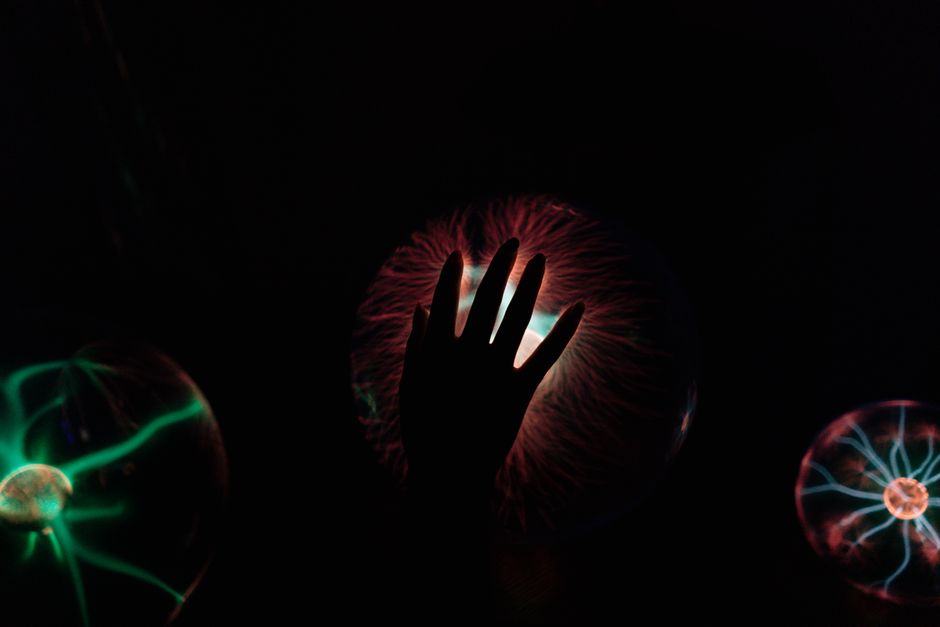
Photo by cottonbro studio on Pexels
Physics is a vast field, so it's broken down into several major branches. While they often overlap, each focuses on different aspects of the universe:
- Classical Physics: This includes theories established before the 20th century. It deals with phenomena at macroscopic (everyday) scales and speeds much lower than the speed of light.
- Mechanics: Studies motion, forces, and energy. Think about falling objects, how levers work, or the movement of planets.
- Thermodynamics: Deals with heat, temperature, and their relation to energy and work. This explains how refrigerators cool or how engines run.
- Electromagnetism: Focuses on electricity, magnetism, and light as related phenomena. This is behind your phone, radio, and all electronics.
- Optics: The study of light and its behavior, including lenses, mirrors, and vision.
- Modern Physics: This emerged in the 20th century to explain phenomena classical physics couldn't, especially at very small (atomic/subatomic) scales or very high speeds.
- Quantum Mechanics: Describes the behavior of matter and energy at the atomic and subatomic level. This is crucial for understanding how atoms bond and how lasers work.
- Relativity: Einstein's theories dealing with space, time, gravity, and the universe at large scales or very high speeds. This explains things like GPS accuracy and the energy in nuclear reactions.
graph TD
    A["Physics"] --> B["Classical Physics"]
    B --> B1["Mechanics (Motion, Forces)"]
    B --> B2["Thermodynamics (Heat, Energy)"]
    B --> B3["Electromagnetism (Electricity, Magnetism, Light)"]
    B --> B4["Optics (Light Behavior)"]
    A --> C["Modern Physics"]
    C --> C1["Quantum Mechanics (Tiny Particles)"]
    C --> C2["Relativity (Space, Time, Gravity)"]
Foundational Concepts

Photo by JESHOOTS.com on Pexels
Regardless of the branch, physics builds on a few core ideas:
- Observation and Experimentation: Physics isn't just about theories; it's about looking at the world, experimenting, and collecting data to test those theories.
- Mathematical Language: Math is the language of physics. We use it to describe physical relationships precisely, make predictions, and solve problems. You'll use algebra, geometry, and eventually calculus.
- Cause and Effect: Physics often seeks to understand why things happen. Every effect usually has a cause, and physics tries to uncover these connections.
- Conservation Laws: Some of the most powerful ideas in physics are conservation laws. These state that certain quantities, like energy, momentum, or charge, remain constant in a closed system. For example, energy can change forms (like from chemical to kinetic), but the total amount stays the same.
3. Worked Example
Let's look at a simple example of a foundational concept: Conservation of Energy.
Imagine you're holding a 1 kg ball 2 meters above the ground. If you drop it, what happens to its energy?
- Start (Ball at rest, 2m high): At this point, the ball has potential energy (energy stored due to its height) but no kinetic energy (energy of motion).
- Gravitational Potential Energy (PE) = mass × gravity × height
- PE = 1 kg × 9.8 m/s² × 2 m = 19.6 Joules (J)
- Kinetic Energy (KE) = 0 J (since it's not moving yet)
- Total Energy = 19.6 J
- Mid-fall (Ball at 1m high, moving): Now the ball has lost some height, so its potential energy has decreased. However, it's now moving, gaining kinetic energy.
- PE = 1 kg × 9.8 m/s² × 1 m = 9.8 J
- Since energy is conserved, the "lost" potential energy must have turned into kinetic energy.
- So, KE = Total Energy - PE = 19.6 J - 9.8 J = 9.8 J
- Total Energy = 9.8 J + 9.8 J = 19.6 J
- Just before hitting the ground (0m high, fastest speed): At this point, all the potential energy has been converted into kinetic energy.
- PE = 0 J (since height is zero)
- KE = Total Energy - PE = 19.6 J - 0 J = 19.6 J
- Total Energy = 0 J + 19.6 J = 19.6 J
Notice how the total energy remains constant (19.6 J) throughout the fall, even though its form changes from purely potential to purely kinetic. This is a powerful demonstration of the conservation of energy principle.
4. Key Takeaways
- Physics is the fundamental science explaining the natural world at all scales.
- It provides the basis for most technologies and other scientific fields.
- Classical physics handles everyday phenomena, while Modern physics covers the very small or very fast.
- The major branches include Mechanics, Thermodynamics, Electromagnetism, Optics, Quantum Mechanics, and Relativity.
- Physics relies on observation, experimentation, and mathematical models to describe natural laws.
- Core concepts like conservation of energy are powerful tools for understanding how systems behave.
Common mistakes to avoid:
- Don't think of physics as isolated facts; it's a connected web of ideas.
- Don't rely solely on memorization; focus on understanding the "why" behind the concepts.
- Don't underestimate the role of math; it's essential for quantitative understanding.
- Don't hesitate to question and critically evaluate theories and observations.
5. Now Try It
Think about a simple device like a bicycle. Spend about 15 minutes jotting down how at least three different branches of physics (from the list above) are at play in its operation. Don't worry about being perfectly accurate with terms, just try to connect the ideas.
What success looks like: You should be able to identify how mechanics explains the wheels and pedals, how thermodynamics relates to friction and heating, and perhaps even a hint of electromagnetism if it has lights or a dynamo.
Frequently asked about Introduction to Physics: Role, Branches, and Foundational Concepts
Get the full physics curriculum
Clone the complete plan to your dashboard for unlimited AI-generated notes, practice quizzes, and a personalised revision schedule.
Create Free Account