Pengantar Farmakologi Dasar dan Bentuk Sediaan Obat
From the 10 nama bahan obat sesuai bentuk sediaan padat, semi padat, dan cairan yang ada di laboratorium curriculum
Pengantar Farmakologi Dasar dan Bentuk Sediaan Obat
TL;DR
You'll learn about pharmacology basics: how drugs interact with the body, and the importance of drug forms. We'll identify drug examples across solid, semi-solid, and liquid dosage forms found in labs. This knowledge is crucial for understanding how to prepare and handle medications correctly.
1. The Mental Model
Think of pharmacology as the science of drug action. Drugs are like tiny tools that interact with your body's systems, and their shape (dosage form) determines how they're delivered and how well they work.
2. The Core Material
Pharmacology is the study of how chemical substances (drugs) interact with living systems. It covers pharmacokinetics (what the body does to the drug – absorption, distribution, metabolism, excretion) and pharmacodynamics (what the drug does to the body – its effects).
The dosage form is the physical form in which a drug is produced and dispensed, such as tablets, creams, or solutions. The chosen dosage form significantly impacts how quickly and effectively a drug enters your body and provides its therapeutic effect. Different forms are suited for different routes of administration (e.g., oral, topical, injection).
Let's look at 10 common drug examples across three main dosage form categories that you'd typically find in a lab setting:
Bentuk Sediaan Padat (Solid Dosage Forms)
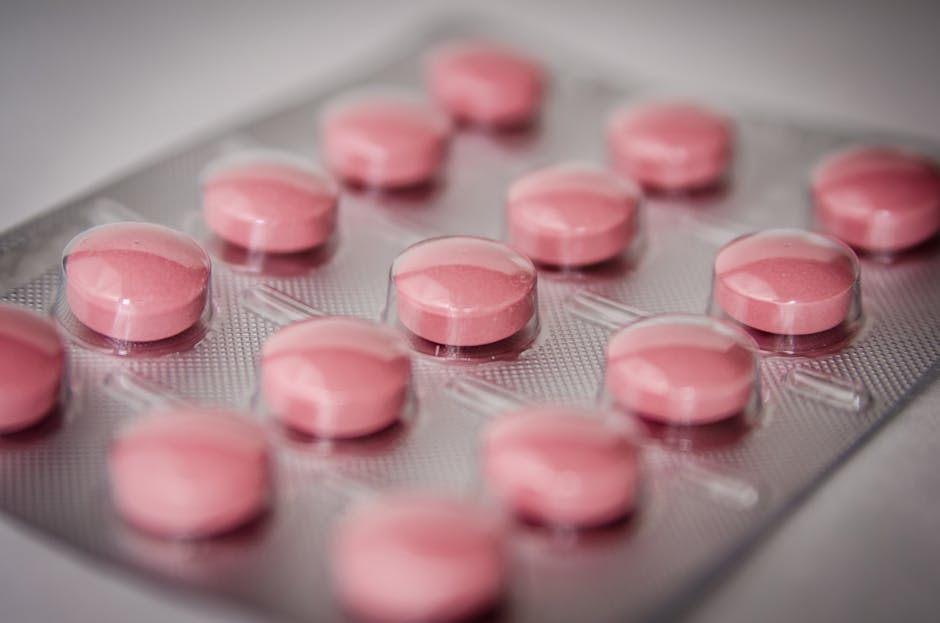
Photo by Pixabay on Pexels
These are solid at room temperature and include powders, granules, tablets, and capsules. They're often preferred for stability and ease of administration.
- Paracetamol (Tablet): Obat pereda nyeri dan penurun demam.
- Amoxicillin (Kapsul): Antibiotik untuk mengatasi infeksi bakteri.
- Ranitidine (Tablet): Mengurangi produksi asam lambung.
- Vitamin C (Tablet Kunyah): Suplemen untuk daya tahan tubuh.
- Attapulgite (Tablet Kunyah): Obat antidiare.
Bentuk Sediaan Semipadat (Semi-Solid Dosage Forms)
Photo by Pixabay on Pexels
These have a consistency between solid and liquid, designed for topical application. They include ointments, creams, gels, and pastes.
- Hydrocortisone (Krim): Anti-inflamasi untuk kulit.
- Miconazole (Salep): Antijamur untuk infeksi kulit.
- Natrium Diklofenak (Gel): Pereda nyeri otot dan sendi.
Bentuk Sediaan Cairan (Liquid Dosage Forms)

Photo by Ravi Roshan on Pexels
These are liquid at room temperature and include solutions, suspensions, emulsions, and syrups. They're often used for quick absorption or for patients who have difficulty swallowing solids.
- Dextromethorphan HBr (Sirup): Obat batuk kering.
- Povidone Iodine (Larutan): Antiseptik untuk luka.
Here's how drug forms are chosen based on their intended use, representing a decision tree:
graph TD
    A["Rute Pemberian Obat"] --> B{"Topikal
(Kulit/Mukosa)"}
    A --> C{"Oral
(Melalui Mulut)"}
    A --> D{"Parenteral
(Injeksi)"}
    A --> E{"Lain-lain
(Inhalasi, Rektal, dll.)"}

    B --> F{"Butuh efek
lokal?"}
    F -- "Ya" --> G["Sediaan Semipadat
(Krim, Salep, Gel)"]
    F -- "Tidak" --> H["Sediaan Cair
(Larutan topikal)"]

    C --> I{"Pasien sulit
menelan?"}
    I -- "Ya" --> J["Sediaan Cair
(Sirup, Suspensi, Eliksir)"]
    I -- "Tidak" --> K{"Stabil dalam
saluran cerna?"}
    K -- "Ya" --> L["Sediaan Padat
(Tablet, Kapsul)"]
    K -- "Tidak" --> J

    D --> M["Steril?
Bioavailabilitas tinggi?"]
    M -- "Ya" --> N["Sediaan Cair
Steril
(Injeksi)"]

    E --> O["Spesifik bentuk
sediaan"]
    O --> P["(Inhaler, Suppositoria)"]

    G --> "Hydrocortisone Cream"
    L --> "Paracetamol Tablet"
    J --> "Dextromethorphan Sirup"
    N --> "Lidocaine Injeksi"
    H --> "Povidone Iodine Larutan"
3. Worked Example
Let's say you're in the lab and need to prepare a pain reliever for a child who can't swallow pills. You have Paracetamol available in both tablet (solid) and syrup (liquid) forms.
Problem: How do you choose the appropriate form and explain why?
Solution: You'd choose the Paracetamol syrup (liquid form).
Explanation:
1. Ease of administration: Children often have difficulty swallowing tablets, making syrup easier to administer accurately.
2. Dosage accuracy: Syrups come with measuring devices (spoons or oral syringes), allowing for precise dosing per kilogram of body weight, which is critical for children.
3. Faster onset (often): Liquids are generally absorbed faster than solids because they don't need to disintegrate first. While tablets can be crushed, this isn't ideal due to potential taste issues, incomplete dosage, or stability problems.
4. Key Takeaways
- Pharmacology studies drug interactions with living systems, encompassing what the body does to the drug (pharmacokinetics) and what the drug does to the body (pharmacodynamics).
- Dosage form dictates how a drug is administered and profoundly affects its absorption, onset of action, and effectiveness.
- Solid forms (tablets, capsules) are generally stable and easy to dose for adults and can be formulated for extended release.
- Semi-solid forms (creams, gels, ointments) are primarily for topical application, delivering localized effects.
- Liquid forms (syrups, solutions) are suitable for patients with swallowing difficulties, children, and often offer a quicker onset of action.
- Always consider the patient's age, condition, and the desired therapeutic effect when selecting a drug's dosage form.
Common Mistakes to Avoid:
- Assuming all forms of the same drug are interchangeable; a tablet won't necessarily act the same or have the same dose as a syrup or cream.
- Ignoring the route of administration; you can't typically give a topical cream orally.
- Underestimating the importance of sterility for parenteral (injectable) forms; this is critical for patient safety.
- Not checking the expiry date or proper storage conditions for any drug form.
5. Now Try It
Spend 15 minutes in your lab (or imagining it). Identify three different drugs from the ten listed above, ensuring they represent one solid, one semi-solid, and one liquid form. For each drug, briefly describe its primary use and one practical reason why that specific dosage form is advantageous for its intended purpose.
Frequently asked about Pengantar Farmakologi Dasar dan Bentuk Sediaan Obat
Get the full 10 nama bahan obat sesuai bentuk sediaan padat, semi padat, dan cairan yang ada di laboratorium curriculum
Clone the complete plan to your dashboard for unlimited AI-generated notes, practice quizzes, and a personalised revision schedule.
Create Free Account