Introduction to Geography and Earth's Systems
From the Geography curriculum
TL;DR
Geography is more than just memorizing maps; it's the study of where things are and why they're there, connecting human activity with the natural world. It helps us understand our planet by breaking it down into interconnected systems like land, water, air, and life itself. By studying these interactions, you'll gain a holistic view of Earth and its complex processes.
1. The Mental Model
Think of Earth as a giant, dynamic house with many interconnected rooms. Geography helps you understand each room, how they're arranged, and how activities in one room affect all the others. It's about seeing the big picture of our planet's physical and human interactions.
2. The Core Material
Geography is broadly divided into two main branches: physical geography and human geography. Physical geography focuses on Earth's natural environment and processes, while human geography deals with human societies and their interaction with the environment. Both are crucial for a complete understanding of our world.
Earth's Four Major Systems (Spheres)
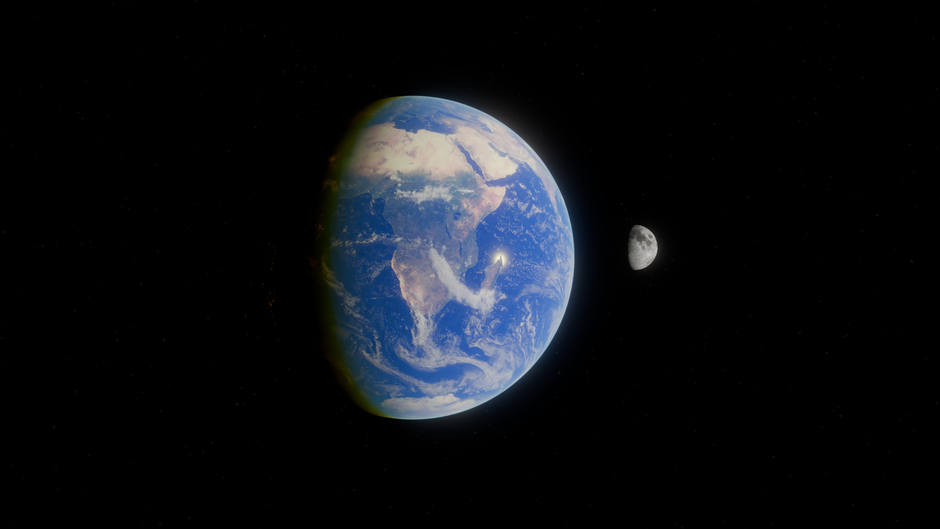
Photo by Zelch Csaba on Pexels
To study Earth, geographers often organize it into four interconnected "spheres" or systems. These systems are constantly interacting, and changes in one can have significant effects on the others.
- Atmosphere: This is the envelope of gases surrounding Earth. It includes the air we breathe, weather patterns, climate, and phenomena like clouds and precipitation. It protects us from solar radiation and regulates temperature.
- Hydrosphere: This encompasses all the water on Earth. This includes oceans, lakes, rivers, glaciers, ice caps, groundwater, and even water vapor in the atmosphere. The water cycle is a key process within the hydrosphere.
- Lithosphere (Geosphere): This refers to Earth's solid outer layer, including the crust and the uppermost part of the mantle. It's where rocks, mountains, soil, and landforms are found. Tectonic plate movement occurs here, shaping continents and causing earthquakes.
- Biosphere: This is where all life on Earth exists. It includes plants, animals, microorganisms, and us! The biosphere interacts with all other spheres, as living things need air, water, and land to survive and, in turn, influence these elements.
Here's a diagram showing how these systems interact:
graph TD
    A["Atmosphere (Air, Weather)"]
    B["Hydrosphere (Water, Ice)"]
    C["Lithosphere (Land, Rocks)"]
    D["Biosphere (Life)"]

    A -- "Affects precipitation, temperature" --> B
    B -- "Evaporation, humidity" --> A
    A -- "Weathering, erosion" --> C
    C -- "Volcanic gases, dust" --> A
    B -- "Erosion, deposition" --> C
    C -- "Groundwater, river channels" --> B
    A -- "Provides oxygen, CO2 for plants" --> D
    D -- "Respiration, photosynthesis" --> A
    B -- "Essential for all life" --> D
    D -- "Transpiration, water purification" --> B
    C -- "Provides habitat, nutrients" --> D
    D -- "Soil formation, decomposition" --> C

    subgraph Earth's Interconnected Systems
        A
        B
        C
        D
    end
These interactions are the core of geographic study. For instance, a volcanic eruption (Lithosphere) releases gases into the atmosphere, affecting global temperatures and weather patterns (Atmosphere), which can impact precipitation (Hydrosphere) and, in turn, the growth of plants and animals (Biosphere).
Location, Place, and Region
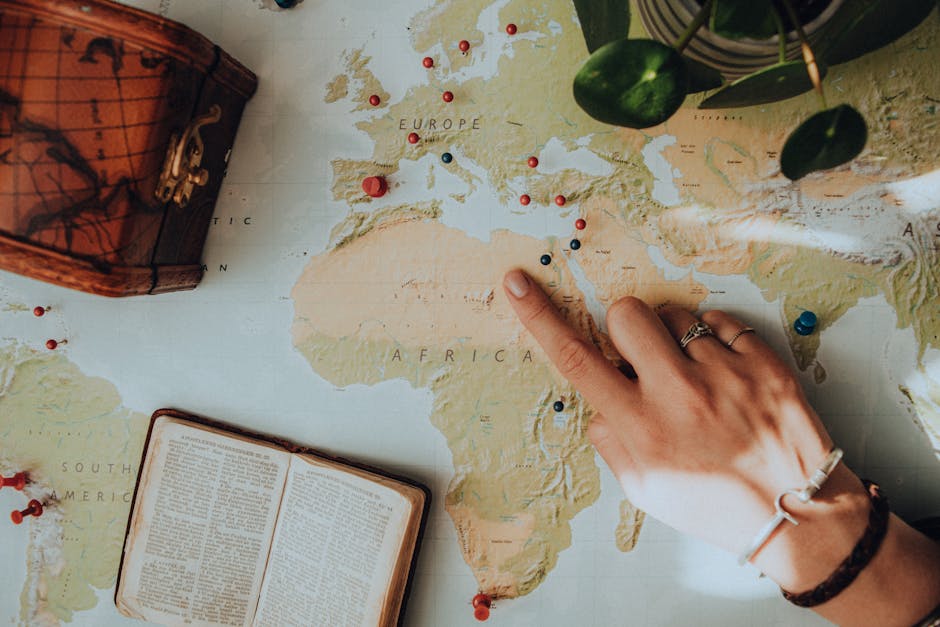
Photo by Elias Strale on Pexels
These fundamental concepts help geographers organize and understand space:
- Location: This answers "where is it?" It can be absolute (e.g., specific coordinates like latitude and longitude) or relative (e.g., "next to the park").
- Place: This describes the human and physical characteristics of a location. It's what makes one area distinct from another. Think about the unique culture, language, climate, and landforms.
- Region: An area defined by one or more common characteristics. Regions can be formal (e.g., a country with shared laws), functional (e.g., a city and its commuting suburbs), or perceptual (e.g., "The South" in the US, defined by cultural perceptions).
3. Worked Example
Let's consider the Amazon Rainforest.
- Atmosphere: The vast amount of trees in the Biosphere release huge amounts of oxygen and moisture into the Atmosphere through transpiration, influencing global weather patterns and contributing to local rainfall. Deforestation here significantly impacts atmospheric carbon dioxide levels.
- Hydrosphere: The Amazon River, the largest river by discharge in the world (part of the Hydrosphere), flows through the rainforest. The river's flow is sustained by rainfall and contributes greatly to the water cycle. Changes in rainfall patterns from atmospheric shifts directly impact the river.
- Lithosphere: The fertile soil (part of the Lithosphere) supports the dense vegetation of the Biosphere. Erosion of this soil, often exacerbated by deforestation and heavy rainfall, can change the landscape and impact the river's clarity and sediment load.
- Biosphere: The rainforest itself is a massive Biosphere, home to incredible biodiversity. The plants and animals here depend on the atmospheric conditions, the hydrological cycle, and the nutrients from the lithosphere. Human activities, like farming or logging (human geography), directly impact this biosphere, which then creates ripple effects across all other systems.
You can see how a change in one system, like deforestation (human impact on Biosphere/Lithosphere), doesn't just affect the trees; it impacts rainfall (Hydrosphere/Atmosphere), soil stability (Lithosphere), and the ability of the region to absorb carbon dioxide (Atmosphere), impacting the global climate.
4. Key Takeaways
- Geography is the holistic study of where things are and why they are there, linking human and physical aspects.
- Earth is made of four interacting systems: Atmosphere (air), Hydrosphere (water), Lithosphere (land), and Biosphere (life).
- Changes in one Earth system always affect the others, demonstrating their deep interconnectedness.
- Understanding location, place, and region helps organize and analyze geographic information efficiently.
-
Both human and physical geography are critical for comprehending global challenges and local environments.
-
Common Mistakes to Avoid:
- Thinking geography is just memorizing capitals; it's about processes and interactions.
- Separating the Earth's systems; always remember they're deeply connected.
- Ignoring human impacts; human activity is a major force shaping all Earth systems.
- Confusing location (where it is) with place (what it's like).
5. Now Try It
Take a local park, a forest, or even your backyard. Spend 15 minutes observing it and describing it in terms of the four Earth systems. For instance, what atmospheric conditions are present (wind, temperature)? Where is the water (puddles, dew)? What landforms do you see (hills, flat ground)? What living things are present (plants, animals)? Then, identify one way these systems interact in that specific location. For example, how does rain (Hydrosphere) affect the soil (Lithosphere) and the growth of grass (Biosphere)? This will help you ground the abstract concepts in a real-world setting.
Frequently asked about Introduction to Geography and Earth's Systems
Study this next
Get the full Geography curriculum
Clone the complete plan to your dashboard for unlimited AI-generated notes, practice quizzes, and a personalised revision schedule.
Save this course free