Nomenclature of Alkanes and Alkyl Halides (Common vs. IUPAC)
From the O chem Class 5 curriculum
Nomenclature of Alkanes and Alkyl Halides (Common vs. IUPAC)
TL;DR
Learning organic nomenclature helps you name molecules systematically, which is crucial for communication in chemistry. You'll focus on alkanes (hydrocarbons with single bonds) and alkyl halides (alkanes with halogens). There are two main naming systems: common names and the more systematic IUPAC names.
1. The Mental Model
Think of naming molecules like naming people – some have common nicknames, but everyone has a formal, systematic name that follows specific rules. In organic chemistry, the IUPAC system is your formal name, ensuring everyone understands exactly which molecule you're talking about.
2. The Core Material
You'll encounter two primary ways to name simple organic molecules: Common Nomenclature and IUPAC Nomenclature. While common names are often shorter and easier for simple cases, IUPAC is the universal standard for unambiguous communication.
2.1 Common Nomenclature (Alkanes & Alkyl Halides)
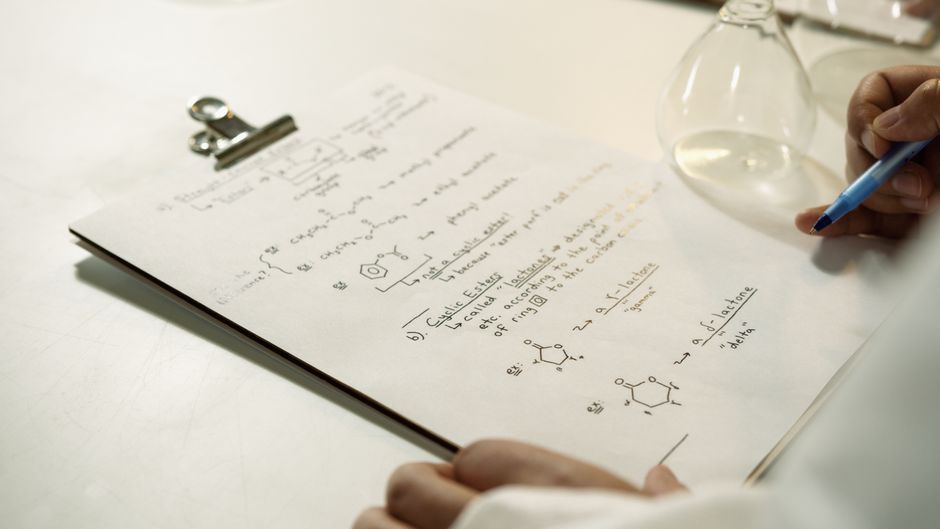
Photo by Artem Podrez on Pexels
Common names are mostly used for smaller, simpler molecules. They often use prefixes like n-, iso-, sec-, and tert- to describe the branching pattern.
- n- (normal): Straight-chain alkanes.
- Example: n-Butane (CH₃CH₂CH₂CH₃)
- iso-: Indicates a methyl group branching off the second to last carbon in the main chain. The total number of carbons (including the branching methyl) determines the parent name.
- Example: Isobutane (2-methylpropane)
- sec- (secondary): Used for alkyl groups where the point of attachment is a secondary carbon (bonded to two other carbons).
- Example: sec-Butyl chloride (2-chlorobutane)
- tert- (tertiary): Used for alkyl groups where the point of attachment is a tertiary carbon (bonded to three other carbons).
- Example: tert-Butyl bromide (2-bromo-2-methylpropane)
For alkyl halides, common names usually list the alkyl group first, followed by the halide.
* "Ethyl iodide" for CH₃CH₂I
2.2 IUPAC Nomenclature (Alkanes)
Photo by Artem Podrez on Pexels
The IUPAC (International Union of Pure and Applied Chemistry) system provides a systematic way to name even complex molecules. For alkanes, follow these steps:
- Find the longest continuous carbon chain: This is your parent chain. Name it based on the number of carbons (methane, ethane, propane, butane, pentane, hexane, etc.).
- Number the parent chain: Start numbering from the end closest to the first substituent (any group attached to the parent chain that's not hydrogen). This ensures the lowest possible numbers for all substituents.
- Identify and name substituents:
- Alkyl groups: Change the alkane "-ane" suffix to "-yl" (e.g., methyl, ethyl, propyl).
- Halogens: Treat them as substituents (fluoro, chloro, bromo, iodo).
- Assign a number to each substituent: This is its "locant" on the parent chain.
- Assemble the name:
- List substituents alphabetically (ignoring prefixes like di-, tri-, sec-, tert-).
- Use prefixes (di-, tri-, tetra-) if there are multiple identical substituents.
- Separate numbers with commas, and numbers from words with hyphens.
- End with the parent alkane name.
Here's a flowchart to help:
graph TD
    A["Identify the longest continuous carbon chain"] --> B["This is your Parent Alkane"]
    B --> C["Number chain from end closest to first substituent"]
    C --> D["Identify all substituents (alkyl groups, halogens)"]
    D --> E["Assign locant (number) to each substituent"]
    E --> F{"Are there multiple identical substituents?"}
    F -- Yes --> G["Use di-, tri-, tetra- prefixes"]
    F -- No --> E
    G --> H["List substituents alphabetically (ignore di-, tri-, etc.)"]
    H --> I["Combine in format: (Locant-Substituent)ParentAlkane"]
2.3 IUPAC Nomenclature (Alkyl Halides)
Photo by Artem Podrez on Pexels
Alkyl halides are named similarly to branched alkanes. Halogens are treated as substituents and generally follow the same priority rules as alkyl groups in numbering.
- Find the longest continuous carbon chain: This contains the carbon bonded to the halogen.
- Number the chain: Start from the end that gives the first substituent (whether alkyl or halogen) the lowest possible number. If there’s a tie, give the lower number to the substituent that comes first alphabetically.
- Name substituents: Halogens are named "fluoro," "chloro," "bromo," or "iodo." Alkyl groups are named as before.
- Assemble the name: List substituents alphabetically, followed by the parent alkane name.
3. Worked Example
Let's name this molecule: CH₃–CH₂–CH(Cl)–CH₃
- Longest chain: 4 carbons (butane).
- Numbering: If we number from left: 1-chloro. If from right: 2-chloro. The lowest number for the substituent is 2. So, 2-chlorobutane.
- Substituent: Chloro at position 2.
- Common Name: The carbon bonded to the chlorine is a secondary carbon (bonded to two other carbons). The alkyl group is a butyl group attached at a secondary carbon. So, sec-butyl chloride.
- IUPAC Name: 2-chlorobutane.
4. Key Takeaways
- Common names use prefixes like n-, iso-, sec-, and tert- for smaller, simpler molecules.
- IUPAC nomenclature is the systematic, universal naming system for organic compounds.
- To name using IUPAC, identify the longest carbon chain (parent alkane).
- Number the parent chain to give substituents the lowest possible numbers.
- List all substituents alphabetically, including their position numbers (locants).
- Halogens are treated as substituents: fluoro, chloro, bromo, iodo.
- Parent alkanes end in "-ane"; alkyl substituents end in "-yl."
Common mistakes to avoid:
- Not finding the absolute longest continuous carbon chain for the parent.
- Incorrectly numbering the chain, leading to higher locant numbers for substituents.
- Forgetting to alphabetize substituents in IUPAC names.
- Confusing iso- with sec- or tert- prefixes in common names.
5. Now Try It
Name the following molecule using both common and IUPAC nomenclature:
CH₃CH(CH₃)CH₂Br
What success looks like: You'll provide two names for the molecule, one common and one IUPAC, clearly showing how you arrived at each name by identifying the parent chain, substituents, and numbering.
Frequently asked about Nomenclature of Alkanes and Alkyl Halides (Common vs. IUPAC)
Study this next
Get the full O chem Class 5 curriculum
Clone the complete plan to your dashboard for unlimited AI-generated notes, practice quizzes, and a personalised revision schedule.
Create Free Account