Introduction to Dynamics and Forces
From the Dynamics physics SPH 3U1 curriculum
TL;DR
Dynamics is the study of why objects move the way they do, focusing on forces that cause changes in motion. Forces are pushes or pulls that can accelerate objects, changing their speed or direction. Newton's Laws of Motion are the fundamental rules governing these interactions.
1. The Mental Model
Think of forces as the "drivers" behind all changes in an object's motion. If something speeds up, slows down, or changes direction, a force is making it happen. No force means no change in motion.
2. The Core Material
In Dynamics, you're moving beyond just describing motion (kinematics) to understanding its causes. This means understanding forces. A force is a vector quantity, meaning it has both a magnitude (how strong it is) and a direction.
What is a Force?

Photo by Ann H on Pexels
A force is simply a push or a pull. We often can't directly "see" a force, but we observe its effect. For example, you can't see gravity, but you see its effect when an apple falls.
Types of Forces
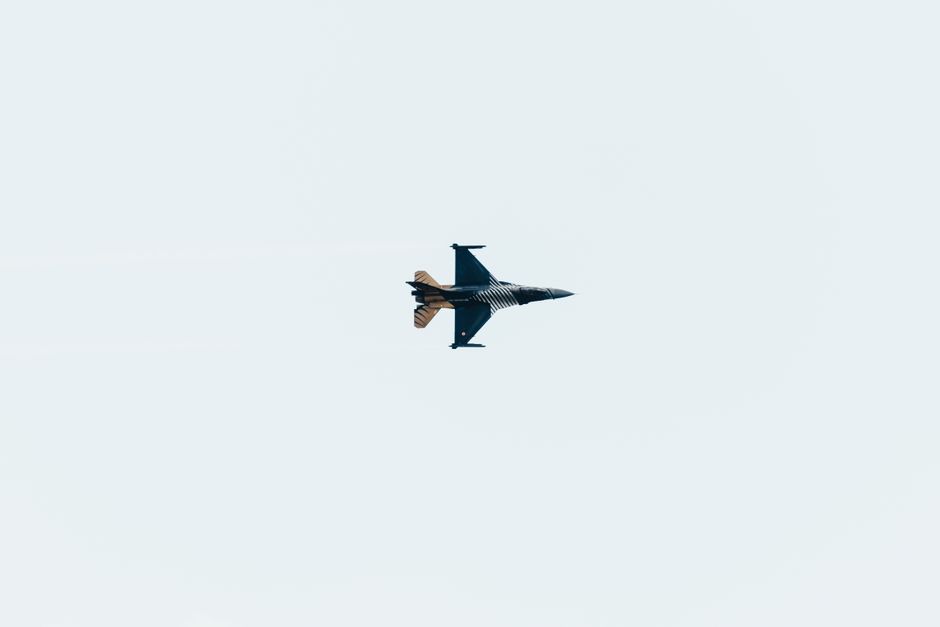
Photo by Hobi Photography on Pexels
You'll encounter several common types of forces:
* Applied Force ($F_A$): A direct push or pull from an external source (like you pushing a box).
* Gravitational Force ($F_g$) or Weight (W): The force pulling an object towards the center of the Earth (or another large body). It's mass times gravitational acceleration ($F_g = mg$).
* Normal Force ($F_N$): The force exerted by a surface perpendicular to an object resting on it. It prevents the object from falling through the surface.
* Friction Force ($F_f$): The force that opposes motion or attempted motion between two surfaces in contact. It can be static (preventing motion) or kinetic (opposing motion).
* Tension Force ($F_T$): The force transmitted through a string, rope, cable, or wire when it is pulled taut.
* Air Resistance/Drag ($F_{air}$): A force that opposes the motion of an object through the air.
Free-Body Diagrams (FBDs)

Photo by cottonbro studio on Pexels
These are super important! An FBD is a visual tool you use to isolate an object and show all the forces acting on it. This helps you analyze the forces without getting confused by what the object is doing to other things.
graph TD
    A["Identify the object of interest"] --> B["Draw a dot or simple shape for the object"]
    B --> C["Draw and label all forces acting *on* the object"]
    C --> D["Show forces as arrows originating from the dot"]
    D --> E["Arrow length can indicate relative magnitude"]
    E --> F["Arrow direction indicates force direction"]
Newton's Laws of Motion

Photo by Jose Manuel Gonzalez Lupiañez Photography on Pexels
These are the bedrock of dynamics:
- Newton's First Law (Law of Inertia): An object at rest stays at rest, and an object in motion stays in motion with the same speed and in the same direction, unless acted upon by an unbalanced force. Basically, things don't change their motion by themselves.
- Newton's Second Law: The acceleration of an object is directly proportional to the net force acting on it and inversely proportional to its mass ($F_{net} = ma$). This is the most important equation you'll use! "$F_{net}$" means the vector sum of all forces.
- Newton's Third Law: For every action, there is an equal and opposite reaction. If object A exerts a force on object B, then object B simultaneously exerts an equal and opposite force on object A. These forces always act on different objects.
3. Worked Example
Let's draw a Free-Body Diagram for a book resting on a horizontal table.
- Object of interest: The book.
- Forces acting on the book:
- Gravitational Force ($F_g$): The Earth pulls the book downwards.
- Normal Force ($F_N$): The table pushes the book upwards, preventing it from falling through.
That's it! Assuming the table is perfectly flat and there's no wind or other pushes.
Here's how you'd draw it:
    ^  F_N (Normal Force from table)
    |
    |
  -----
  | | |
  |   |  <-- Book (represented by a square/dot)
  | | |
  -----
    |
    |
    v  F_g (Gravitational Force from Earth)
Since the book isn't accelerating up or down, the upward normal force ($F_N$) must be equal in magnitude and opposite in direction to the downward gravitational force ($F_g$).
4. Key Takeaways
- Forces are pushes or pulls that cause objects to accelerate (change their velocity).
- Forces are vector quantities, meaning they have both magnitude and direction.
- Free-Body Diagrams isolate an object and show all forces acting on it.
- Newton's First Law explains inertia – objects resist changes in motion.
- Newton's Second Law ($F_{net} = ma$) quantifies the relationship between net force, mass, and acceleration.
- Newton's Third Law states that forces come in equal and opposite pairs acting on different objects.
- Common forces like gravity, normal force, and friction will appear frequently.
Common Mistakes to Avoid:
- Confusing action-reaction pairs: Remember they act on different objects. The Normal Force and Gravity on a book are NOT an action-reaction pair.
- Forgetting units: Forces are in Newtons (N), mass in kilograms (kg), and acceleration in meters per second squared (m/s²).
- Ignoring direction: Always consider the direction of forces, especially in FBDs and when calculating net force.
- Mixing up mass and weight: Mass is a measure of inertia (kg), while weight is the force of gravity (N).
5. Now Try It
Imagine you're pushing a heavy box across a rough, horizontal floor. What forces are acting on the box? Try to draw a simple FBD for this situation. Think about the direction of each force.
Success looks like: Listing at least four forces (applied, gravitational, normal, friction) and indicating their correct directions from a central point representing the box.
Frequently asked about Introduction to Dynamics and Forces
Study this next
Get the full Dynamics physics SPH 3U1 curriculum
Clone the complete plan to your dashboard for unlimited AI-generated notes, practice quizzes, and a personalised revision schedule.
Save this course free