Introduction to Historical Linguistics and Pre-English Periods
From the History of the English language curriculum
TL;DR
Historical linguistics studies how languages change over time, revealing their origins and relationships. English, specifically, didn't just appear; it evolved from earlier languages over thousands of years. Understanding these ancient roots helps us make sense of modern English's quirks and complexities.
1. The Mental Model
Think of a language like a family tree. It has ancestors, branches, and cousins, all connected through a shared past. Looking at Old English or even earlier languages is like tracing your own lineage back through generations, seeing how you got to be who you are today.
2. The Core Material
Historical linguistics is about figuring out how languages grow, split, and blend. It looks at changes in sounds, grammar, vocabulary, and even writing systems over centuries. It's not just about English; it's a field that applies to all languages.
The Indo-European Family Tree

Photo by Muammar Jefri on Pexels
Most European languages, and many in India and Iran, come from a common ancestor called Proto-Indo-European (PIE). We don't have written records of PIE, but linguists reconstruct it by comparing its daughter languages. English is part of the Germanic branch of this massive family.
Here's a simplified look at how English fits in:
graph TD
    A["Proto-Indo-European (PIE)"] --> B["Proto-Germanic"]
    B --> C["West Germanic"]
    C --> D["Old English (Anglo-Saxon)"]
    D --> E["Middle English"]
    E --> F["Early Modern English"]
    F --> G["Modern English"]
    B --> H["North Germanic"]
    H --> I["Old Norse"]
    B --> J["East Germanic"]
    J --> K["Gothic (extinct)"]
    A --> L["Italic (Latin)"]
    L --> M["French, Spanish, Italian"]
    A --> N["Celtic (Welsh, Irish)"]
    A --> O["Slavic (Russian, Polish)"]
    A --> P["Indo-Iranian (Hindi, Persian)"]
From PIE to Proto-Germanic

Photo by Maksim Goncharenok on Pexels
One big shift from PIE to Proto-Germanic was Grimm's Law. This was a systematic set of sound changes that occurred around 500 BC. For example:
- PIE *p became Germanic f (e.g., PIE *p_atēr > Old English _f_æder 'father')
- PIE *t became Germanic þ (th) (e.g., PIE *tr_ei > Old English _þ_reo 'three')
- PIE *k became Germanic h (e.g., PIE *k_er_d > Old English _h_eorte 'heart')
Grimm's Law is crucial because it helps us see the direct relationship between Germanic languages (like English) and other Indo-European languages (like Latin or Greek), even though the words look very different now.
Pre-English Europe: The Celtic Substrate
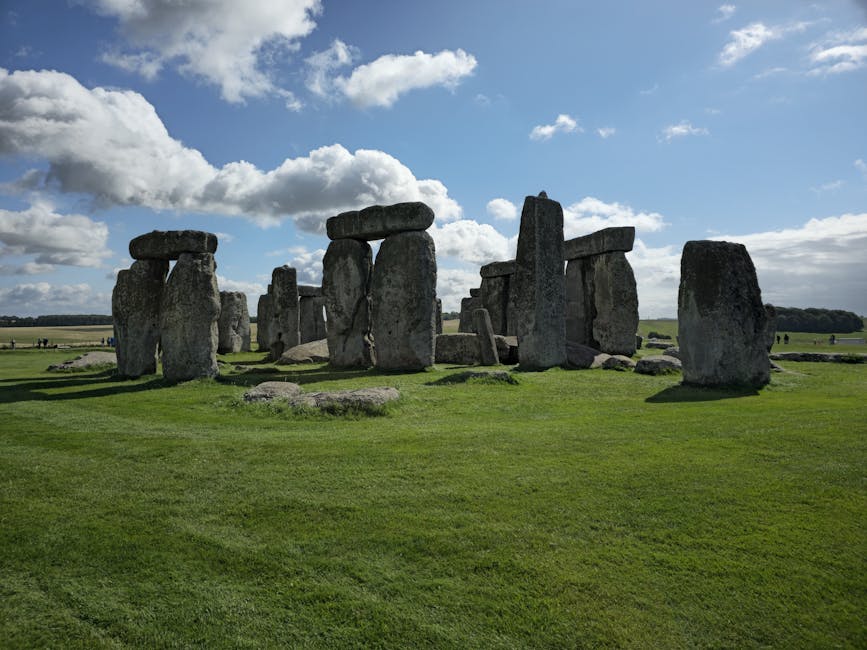
Photo by Ivan Dražić on Pexels
Before the Germanic peoples (Angles, Saxons, Jutes) arrived in Britain in the 5th century AD, the island was primarily Celtic-speaking. These languages, like Welsh, Scots Gaelic, and Irish, are still spoken today. While English didn't directly descend from Celtic, there are a few Celtic loanwords (e.g., brock 'badger', combe 'valley') and place names (e.g., London, Thames, Avon) that remain. This early presence of Celtic is sometimes called a "Celtic substrate" – a linguistic layer that was mostly covered up but left some traces.
The Germanic Invasions and the Birth of Old English

Photo by Budget Bizar on Pexels
Around 449 AD, Germanic tribes from what is now northern Germany and Denmark started settling in Britain. They brought their dialects with them, which, over time, blended and evolved into what we call Old English (or Anglo-Saxon). Old English was spoken from roughly 450 to 1100 AD. It looked and sounded very different from modern English, with a much more complex grammar (think noun cases like in Latin or German).
3. Worked Example
Let's trace the word "foot" back.
- Modern English: foot
- Old English: fōt (pronounced something like "foht")
- Proto-Germanic (reconstructed): *fōts
- Proto-Indo-European (reconstructed): *pṓds
Notice the 'f' in English and Germanic compared to the 'p' in PIE. This is a classic example of Grimm's Law at work: the voiceless labial stop /p/ in PIE shifted to the voiceless labial fricative /f/ in Proto-Germanic. This systematic change is one of the key pieces of evidence linking English back to PIE.
4. Key Takeaways
- Historical linguistics studies language change over time, including sound, grammar, and vocabulary.
- English is part of the Indo-European language family, specifically the West Germanic branch.
- Proto-Indo-European is the reconstructed common ancestor of many European and Asian languages.
- Grimm's Law describes systematic sound changes that marked the transition from PIE to Proto-Germanic.
- Old English developed from the dialects of Germanic invaders who settled in Britain after 449 AD.
- Before Germanic influence, Britain was primarily Celtic-speaking, leaving some subtle traces in English.
- Understanding these historical layers explains many seemingly irregular features of modern English.
Common mistakes to avoid:
- Don't confuse Old English with Shakespearian English; they're vastly different.
- Avoid thinking English is "pure" or uninfluenced; it's a blend.
- Don't assume language changes are random; they often follow systematic rules.
- Don't forget that languages are always changing, even today.
5. Now Try It
Take five common English words (e.g., mother, brother, heart, night, fish). Now, using an etymological dictionary (like the Oxford English Dictionary online or Wiktionary), try to find their Old English forms and see if their Germanic and Indo-European roots are listed. Pay attention to how the initial consonants might relate to Grimm's Law. What does this tell you about their evolutionary path?
Frequently asked about Introduction to Historical Linguistics and Pre-English Periods
Study this next
Get the full History of the English language curriculum
Clone the complete plan to your dashboard for unlimited AI-generated notes, practice quizzes, and a personalised revision schedule.
Save this course free