Foundations of Scientific Inquiry
From the science curriculum
TL;DR
Scientific inquiry is a systematic way of understanding the world based on observation and testing. It uses a structured process to ask clear questions, gather evidence, and build explanations. You'll learn how to think like a scientist to explore and explain phenomena.
1. The Mental Model
Think of scientific inquiry as detective work. You observe something interesting, form an idea about why it's happening, look for clues to test that idea, and then use those clues to refine your understanding. It's an ongoing cycle of curiosity and investigation.
2. The Core Material
Scientific inquiry isn't just one step; it's a dynamic, iterative process. It helps you move from just seeing something to understanding how and why it happens.
The Scientific Method (Simplified)
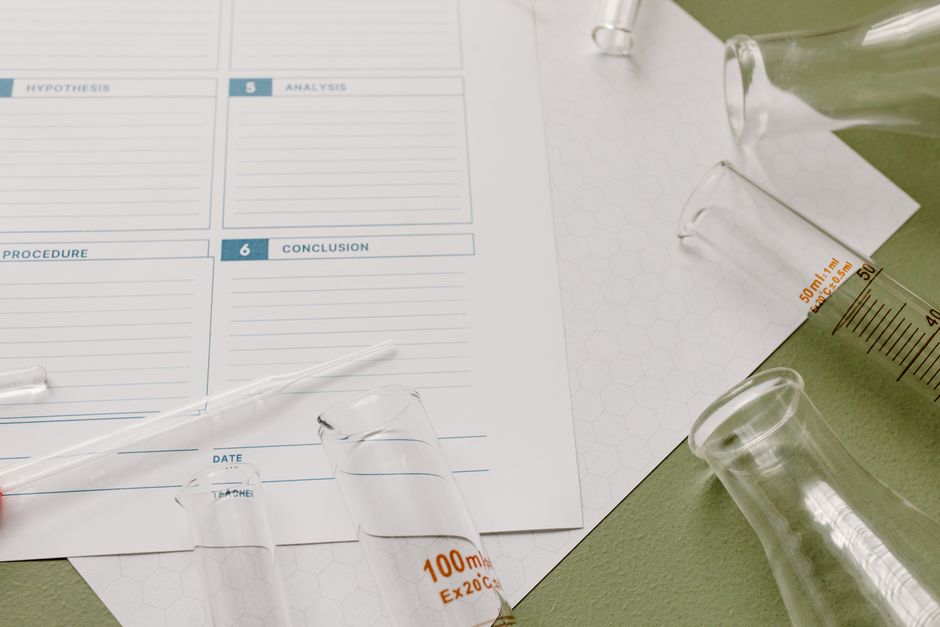
Photo by Tara Winstead on Pexels
The core of scientific inquiry is often summarized as the scientific method. It's not a rigid checklist, but a flexible guide you can adapt.
- Ask a Question: This is where it all begins. It needs to be something you can investigate and measure.
- Do Background Research: Find out what's already known about your question. This helps you avoid repeating mistakes and build on existing knowledge.
- Construct a Hypothesis: This is your educated guess, a testable explanation for your observation. It's usually an "If [this happens], then [this will happen]" statement.
- Test Your Hypothesis with an Experiment: Design a way to check if your hypothesis is correct. This involves careful planning to control variables.
- Analyze Data & Draw Conclusions: Look at the results of your experiment. Did they support your hypothesis, or suggest it was wrong?
- Communicate Results: Share what you've learned. Other scientists can then build on your work or try to replicate it.
Crucially, the process often loops back. If your hypothesis wasn't supported, you might revise it and test again.
Variables in Experiments

Photo by Daniil Komov on Pexels
When you do an experiment, you're usually looking at how one thing affects another. These "things" are called variables.
- Independent Variable (IV): This is the variable you change or control. It's what you're testing the effect of.
- Dependent Variable (DV): This is the variable you measure. It's the outcome that might be affected by the independent variable.
- Controlled Variables: These are all the other factors you keep the same so they don't influence your results. If you don't control these, you can't be sure what caused your observed changes.
For example, if you're testing how much light affects plant growth:
* IV: Amount of light (e.g., direct sun, shade).
* DV: Plant growth (e.g., height, number of leaves).
* Controlled Variables: Type of plant, amount of water, type of soil, temperature, pot size.
graph TD
    A["Observation/Curiosity"] --> B["Ask a Testable Question"]
    B --> C["Background Research"]
    C --> D["Formulate Hypothesis"]
    D --> E["Design & Conduct Experiment"]
    E --> F["Collect & Analyze Data"]
    F --> G{"Does Data Support Hypothesis?"}
    G -- "Yes" --> H["Draw Conclusions & Communicate"]
    G -- "No" --> D
    H --> I["Further Questions/New Hypotheses"]
    I --> B
3. Worked Example
Let's say you notice some plants in your garden grow taller than others, even though they're the same type of plant.
1. Ask a Question: Does the amount of fertilizer affect how tall my tomato plants grow?
2. Background Research: You might look up what nutrients tomato plants need and how different fertilizers contribute to growth. You learn about nitrogen, phosphorus, and potassium (NPK).
3. Construct a Hypothesis: "If I give my tomato plants more fertilizer, then they will grow taller than plants with less fertilizer."
4. Test Your Hypothesis with an Experiment:
* Independent Variable (IV): Amount of fertilizer (e.g., Group A: no fertilizer, Group B: half-strength, Group C: full-strength).
* Dependent Variable (DV): Plant height (measured in cm after a specific time).
* Controlled Variables: You choose 9 identical tomato seedlings. You put 3 in each group (A, B, C). All plants get the same amount of water, sunlight, same type of soil, same pot size, and are kept at the same temperature. You measure their initial height. You apply fertilizer according to your schedule.
5. Analyze Data & Draw Conclusions: After 4 weeks, you measure the height of all 9 plants.
* Group A (no fertilizer) average height: 30 cm
* Group B (half-strength) average height: 45 cm
* Group C (full-strength) average height: 50 cm
The data suggests that more fertilizer did lead to taller plants. You conclude that your hypothesis was supported.
6. Communicate Results: You tell your friends about what you found. You might even suggest they try different fertilizer levels. This could lead to a new question: Does too much fertilizer become harmful? (Loop back to Ask a Question!)
4. Key Takeaways
- Scientific inquiry is a flexible, iterative process, not a rigid set of steps.
- Start with a clear, testable question based on an observation.
- A hypothesis is a testable, educated guess, often an "If...then..." statement.
- Experiments involve changing one independent variable and measuring its effect on a dependent variable, while keeping all other variables controlled.
- Analyze your data to see if it supports your hypothesis, then draw conclusions.
- Scientists share their findings and often develop new questions from their results.
Common Mistakes to Avoid:
- Not controlling variables: If you don't control other factors, you can't be sure what caused your results.
- Forming untestable hypotheses: Questions like "Is the sky beautiful?" aren't scientific because "beautiful" can't be objectively measured.
- Cherry-picking data: Only focusing on results that support your hypothesis and ignoring contradictory evidence.
- Confusing correlation with causation: Just because two things happen together doesn't mean one caused the other.
5. Now Try It
Think of a simple, everyday observation you've made, for example: "Does playing music help my plants grow better?" or "Does the color of a t-shirt affect how hot it feels in the sun?"
What to do:
1. Formulate a testable question about your observation.
2. Write down a hypothesis in the "If...then..." format.
3. Identify the independent variable, dependent variable, and at least three controlled variables you'd need for an experiment.
What success looks like: You'll have a clear question and hypothesis, and you'll be able to clearly identify the key variables involved in testing your idea.
Frequently asked about Foundations of Scientific Inquiry
Study this next
Get the full science curriculum
Clone the complete plan to your dashboard for unlimited AI-generated notes, practice quizzes, and a personalised revision schedule.
Save this course free