Foundations of Chemistry: Matter and Measurement
From the Chemistry curriculum
TL;DR
Chemistry is the study of matter and its changes, focusing on its composition, properties, and how it interacts. Accurate measurement is fundamental, requiring correct units, precision, and an understanding of uncertainty. Significant figures and scientific notation help us express measurements honestly and concisely.
1. The Mental Model
Think of chemistry as trying to understand all the "stuff" around you. We want to know what it's made of, what it does, and how we can measure it precisely. It's like being a detective for materials, making sure your tools (measurements) are always reliable.
2. The Core Material
What is Matter?

Photo by Ann H on Pexels
Matter is anything that has mass and takes up space (has volume). It's all the "stuff" in the universe.
- Substances: These are pure forms of matter with a uniform and definite composition, like pure water (H₂O) or gold (Au).
- Elements: Can't be broken down into simpler substances by chemical means (e.g., Oxygen, Iron).
- Compounds: Formed when two or more elements are chemically combined in a fixed ratio (e.g., Water, Salt).
- Mixtures: Combinations of two or more substances not chemically combined.
- Homogeneous Mixtures (Solutions): Uniform composition throughout (e.g., salt dissolved in water, air). You can't see the different parts.
- Heterogeneous Mixtures: Non-uniform composition; you can see distinct parts (e.g., sand and water, salad dressing).
States of Matter
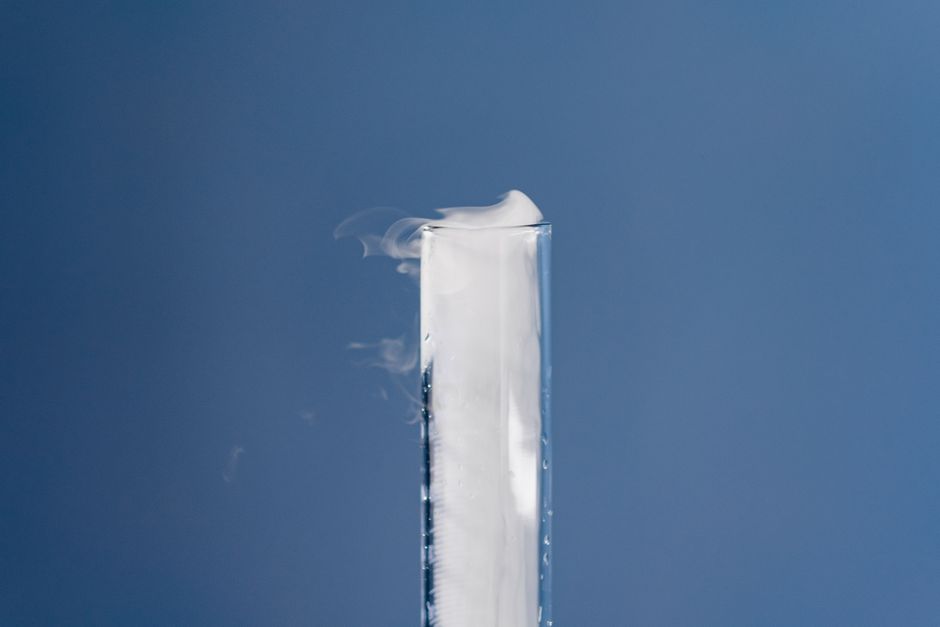
Photo by Ron Lach on Pexels
Matter exists in different physical forms:
* Solid: Definite shape and volume. Particles are tightly packed and vibrate in fixed positions.
* Liquid: Indefinite shape (takes shape of container), definite volume. Particles are close but can move past each other.
* Gas: Indefinite shape and volume. Particles are far apart and move randomly.
* (Plasma): Ionized gas, like in stars or lightning.
Physical vs. Chemical Properties and Changes

Photo by Tima Miroshnichenko on Pexels
- Physical Properties: Can be observed or measured without changing the substance's identity (e.g., color, melting point, density, hardness).
- Physical Changes: Alter a substance's physical appearance but not its chemical composition (e.g., melting ice, boiling water, dissolving sugar).
- Chemical Properties: Describe how a substance reacts to form new substances (e.g., flammability, reactivity with acid).
- Chemical Changes (Reactions): One or more substances are converted into different substances (e.g., burning wood, rusting iron, baking a cake).
graph TD
    Matter["Matter"] --> HasMassVolume["Has Mass & Volume"]
    HasMassVolume --> Classification["Classification of Matter"]
    Classification --> Substances["Pure Substances"]
    Classification --> Mixtures["Mixtures"]
    Substances --> Elements["Elements (e.g., Oxygen, Gold)"]
    Substances --> Compounds["Compounds (e.g., Water, Salt)"]
    Mixtures --> Homogeneous["Homogeneous Mixtures (Solutions, e.g., Air, Saltwater)"]
    Mixtures --> Heterogeneous["Heterogeneous Mixtures (e.g., Sand & Water, Salad)"]
    Matter --> StatesOfMatter["States of Matter"]
    StatesOfMatter --> Solid["Solid (Definite Shape & Volume)"]
    StatesOfMatter --> Liquid["Liquid (Indefinite Shape, Definite Volume)"]
    StatesOfMatter --> Gas["Gas (Indefinite Shape & Volume)"]
    Matter --> PropertiesChanges["Properties & Changes"]
    PropertiesChanges --> PhysicalProp["Physical Properties (e.g., Color, Density)"]
    PropertiesChanges --> ChemicalProp["Chemical Properties (e.g., Flammability)"]
    PropertiesChanges --> PhysicalChange["Physical Changes (e.g., Melting, Boiling)"]
    PropertiesChanges --> ChemicalChange["Chemical Changes (Reactions, e.g., Burning, Rusting)"]
Measurement
Every measurement has a number and a unit. Units are crucial! We primarily use the International System of Units (SI).
- Length: meter (m)
- Mass: kilogram (kg) - not grams!
- Time: second (s)
- Temperature: Kelvin (K) - Celsius (°C) is often used, K = °C + 273.15
- Amount of Substance: mole (mol)
- Volume: liter (L) or cubic meter (m³) - 1 L = 1 dm³ = 1000 cm³ = 1000 mL
- Density: mass/volume (e.g., g/mL, g/cm³)
Precision and Accuracy
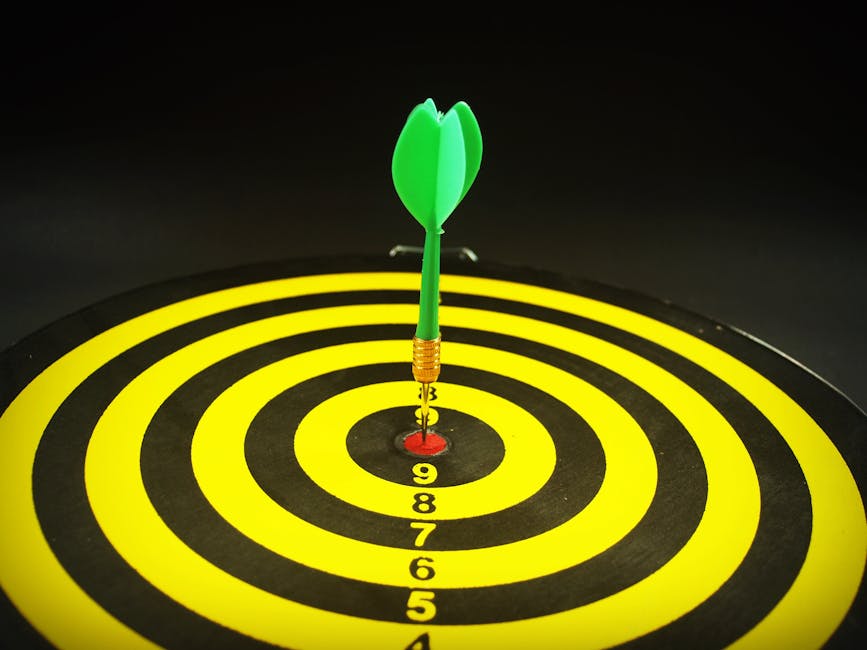
Photo by icon0 com on Pexels
- Accuracy: How close a measurement is to the true value.
- Precision: How close multiple measurements are to each other (reproducibility). You can be precise but inaccurate!
Significant Figures (Sig Figs)
Sig figs tell you which digits in a measurement are reliable. They reflect the precision of your measuring tool.
Rules for counting sig figs:
1. Non-zero digits are always significant (e.g., 234 L has 3 sig figs).
2. Zeros between non-zero digits are significant (e.g., 1005 kg has 4 sig figs).
3. Leading zeros (before non-zeros) are NOT significant (e.g., 0.0034 g has 2 sig figs).
4. Trailing zeros (at the end) are significant ONLY if the number contains a decimal point (e.g., 50.0 mL has 3 sig figs; 50 mL has 1 sig fig).
5. Exact numbers (counted items, definitions like 1 inch = 2.54 cm) have infinite sig figs.
Rules for calculations:
* Multiplication/Division: The answer has the same number of sig figs as the measurement with the fewest sig figs.
* Addition/Subtraction: The answer has the same number of decimal places as the measurement with the fewest decimal places.
Scientific Notation
Used for very large or very small numbers. It expresses a number as M × 10ⁿ, where M is a number between 1 and 10, and n is an integer.
- Moving the decimal left makes
npositive.- 3,400,000 becomes 3.4 × 10⁶
- Moving the decimal right makes
nnegative.- 0.0000078 becomes 7.8 × 10⁻⁶
3. Worked Example
Let's say you measure a piece of metal. Its mass is 15.25 g (measured on a balance) and its volume is 2.3 mL (measured by displacement in a graduated cylinder). You want to find its density.
1. Identify the formula: Density = Mass / Volume
2. Plug in the numbers with units: Density = 15.25 g / 2.3 mL
3. Perform the calculation: 15.25 / 2.3 ≈ 6.6304347...
4. Apply significant figure rules:
* 15.25 g has 4 sig figs (all non-zeros).
* 2.3 mL has 2 sig figs (all non-zeros).
* For division, your answer must have the same number of sig figs as the measurement with the fewest sig figs. Here, that's 2 sig figs.
5. Round the answer: Round 6.6304347... to 2 sig figs. The third digit (3) is less than 5, so you round down.
6. State the final answer with correct units and sig figs: Density = 6.6 g/mL
4. Key Takeaways
- Matter is anything with mass and volume; it can be a pure substance (element/compound) or a mixture (homogeneous/heterogeneous).
- Physical changes alter appearance but not identity; chemical changes form new substances.
- Every measurement needs a number and a unit (usually SI units like meters, kilograms).
- Accuracy is hitting the target; precision is hitting the same spot repeatedly.
- Significant figures communicate the precision of your measurements in calculations.
- Scientific notation efficiently handles very large or very small numbers.
- Density is a derived property, calculated as mass divided by volume.
Common Mistakes to Avoid:
* Forgetting units in your final answer.
* Confusing accuracy with precision.
* Ignoring significant figure rules in calculations, which implies false precision.
* Miscounting significant figures, especially with leading or trailing zeros.
* Not using scientific notation for extremely large or small numbers when appropriate, making them hard to read.
5. Now Try It
You measure the length of a desk as 1.54 meters, its width as 0.72 meters, and its height as 0.812 meters. Calculate the volume of the desk, making sure your answer has the correct number of significant figures and units.
What to do:
1. Write down the formula for volume (Length × Width × Height).
2. Substitute your measurements into the formula.
3. Perform the calculation.
4. Apply the significant figure rule for multiplication to your result.
5. State your final answer with the correct units.
What success looks like: Your final answer will be a single number, followed by the correct SI volume unit, and rounded to the appropriate number of significant figures.
Frequently asked about Foundations of Chemistry: Matter and Measurement
Study this next
Get the full Chemistry curriculum
Clone the complete plan to your dashboard for unlimited AI-generated notes, practice quizzes, and a personalised revision schedule.
Save this course free